
Insights^

Find our analysis on legislation, regulations, MedPAC meetings, and more. 

What Will Congress Do about Pending PAYGO Cuts?

The debt ceiling, appropriations, infrastructure, reconciliation – Congress has a lot on its plate right now.  On top of that, Congress has another item to address that health care stakeholders have been watching closely: an automatic 4% cut to Medicare starting on January 1, 2022.

What’s going on?  In March, the $1.9 trillion American Rescue Plan Act passed and raised the deficit. This triggered automatic PAYGO cuts to Medicare and other programs because of a law signed in 2010, the Pay-As-You-Go (PAYGO) Act, which prohibited new legislation from increasing the federal budget deficit.

What’s Congress doing?  Congress has always acted to waive PAYGO cuts, but not in March of 2021 when lawmakers failed to reach an agreement. At the time, the House overwhelmingly voted to waive PAYGO, but a similar proposal in the Senate failed to garner enough votes to override a filibuster.  So far, there has been little word from lawmakers about the plans to address PAYGO as the end of the year approaches.

Why does it matter?  The American Hospital Association (AHA) estimates that a 4% reduction in Medicare spending, or about $36 billion, would result in $9.4 billion in cuts to hospitals provider for fee-for-service (FFS) Medicare reimbursement in calendar year 2022.  These losses would come at a time when hospitals and other providers are still grappling with revenue losses related to the COVID-19 pandemic.

It’s not just PAYGO: Health care providers are facing other cuts at the year’s end that, combined with PAYGO, could prove devastating.  These include:

  • Medicare sequestration.  Congress passed legislation back in April to extend the moratorium on 2% cuts to Medicare payments, known as sequestration, through the end of 2021.  The 2% cuts were initially postponed by Congress as a part of the CARES Act in 2020 to help providers struggling with the financial burden of the pandemic.
  • 2021 Physician Fee Schedule.  Finalized in July, the 2021 Physician Fee Schedule will cut payments to physicians next year by 3.75%.  The cut was initially set to go into effect in 2021, but Congress provided an extra $3 billion in funding in late 2020 to hold on the cuts until the beginning of 2022.

The bottom line: The combination of PAYGO, Medicare sequestration, and the Physician Fee Schedule could mean a 9% reduction in Medicare physician payments next year.

What’s being done?  Leading stakeholder organizations including the AHA and the American Medical Association (AMA) have sent letters to congressional leadership urging action to waive pending PAYGO cuts, as well as the coming Medicare sequester and Physician Fee Schedule cut.  Furthermore, on October 14, 245 bipartisan House members sent a letter to congressional leaders on the aforementioned Medicare cuts.  Congress has provided much assistance to health care providers over the course of the pandemic, and providers are urging Congress to take action once again to help the industry make it through what is hopefully the final stage of the pandemic.

online-marketing-hIgeoQjS_iE-unsplash-1920x1080

The Federal Government’s Spookiest Sites

Washington, DC is a historic city, and one of the ways that history manifests itself is though tales of ghosts and other unexplained phenomena.  With Halloween just around a corner, what better time to check in on all the federally owned buildings and well-known landmarks in the District of Columbia that have their own spooky histories?

The White House

One of the most well-known buildings in Washington, DC is also perhaps the most haunted.  Abraham Lincoln reportedly received visits from his son Willie, who passed away in the White House at age 11, while the former first lady Mary Todd Lincoln may have heard Thomas Jefferson playing the violin and Andrew Jackson swearing.  Following his assassination, President Lincoln himself purportedly became a ghost and allegedly appeared before British Prime Minister Winston Churchill and Queen Wilhelmina of the Netherlands.

Smithsonian Castle

The Smithsonian’s namesake is English chemist and mineralogist James Smithson, and his remains were reinterred in the Castle in 1904.  Despite Smithson never setting foot in the Smithsonian Castle when alive, his ghost has appeared in the building many times. The ghost of Spencer Baird, the Smithsonian’s first curator, has also been spotted.

US Capitol Building

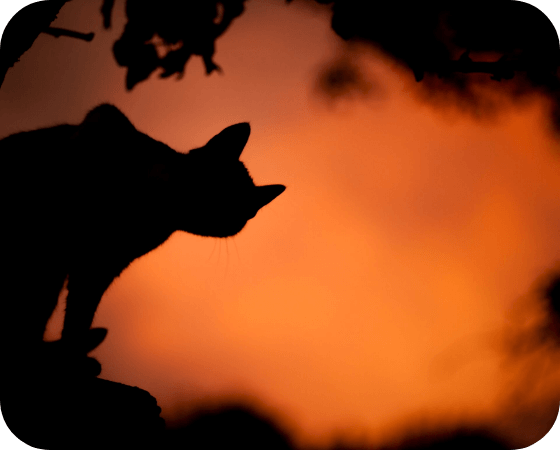
The Capitol building served as a makeshift infirmary during the Civil War, which would explain why staffers have spotted the ghost of an unknown Union Army soldier in the Hall of Statues.  Other ghosts purportedly include Congressman William Preston Taulbee (D-KY), who was shot in the Capitol building by a journalist who was the subject of Taulbee’s bullying, and John Lenthall, a construction superintendent who died in an accident during the building’s construction.  However, the Capitol’s most famous supernatural specter may be a so-called “demon cat” who has appeared just days before tragic events such as the assassinations of Abraham Lincoln and John F. Kennedy.

Federal Aviation Administration (FAA) Headquarters

The location of the FAA headquarters is at 600 Independence Avenue SW, which was once the site of a slave market on the property of Robey’s Tavern.  The property consisted of a large wall where slaves were auctioned as well as a two-story home that housed slaves in the basement.  Some people have allegedly heard the clinking of chains at night near the headquarters.

Lafayette Square Park

Located just across from the White House, Lafayette Square is the site where Philip Barton Key II, the son of Francis Scott Key, was shot to death after having an affair with a married woman.  Key’s ghost has since been spotted in the park.

Library of Congress

Shortly after the end of World War I, visitors to the Library of Congress began noticing a ghost in the library’s main reading room.  The ghost was suspected to be Cecil Barda, a young man who visited the room almost daily for several years before enlisting in the Army in 1917.  Barda later died in a training accident before he could be deployed to Europe.  Since the Library of Congress was modernized shortly after World War II, there has been no sighting of Barda’s ghost in the main reading room.

saso-tusar-yP19KADwhEI-unsplash-1920x1920

Subscribe to Us Now!

Be a DC insider by getting our updates straight to your inbox