Insights^

Find our analysis on legislation, regulations, MedPAC meetings, and more. 

What Happened, What You Missed: April 25-29

Moderna Requests Authorization for COVID-19 Vaccine in Children under 6

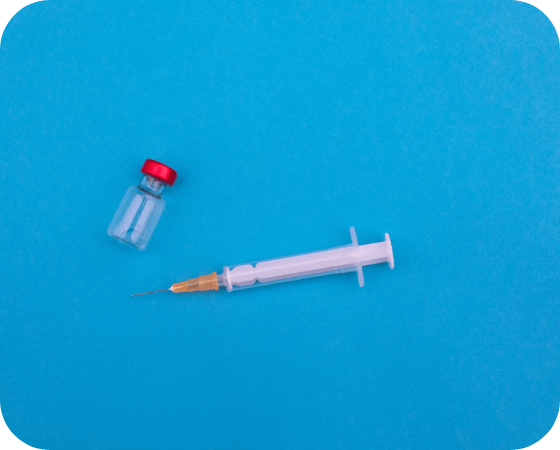
Moderna announced on Thursday that it has begun the application process for emergency use authorization (EUA) for its COVID-19 vaccine in children six months to six years of age.  Moderna also released revised clinical trial data on Thursday that showed its two-shot regimen is 51% effective at preventing symptoms in children ages 6 months to under 2 years.  However, Moderna’s application process is ongoing, and the company is not expected to submit all of its clinical trial data to the FDA until the first week of May.  According to a tentative schedule by the Food and Drug Administration (FDA), kids under age six maybe be able to receive their COVID-19 vaccine from Moderna as soon as this June.

Administration Finalizes the 2023 Notice of Benefit and Payment Parameters

On Thursday, the Department of Health and Human Services (HHS) and Centers for Medicare and Medicaid Services (CMS) issued a final rule on the 2023 Notice of Benefit and Payment Parameters, which includes updates to the nondiscrimination policy for Affordable Care Act essential health benefits, standardized health plan options, and other changes.  The rule also refined prospective network adequacy reviews to focus on time and distance as well as appointment waiting times starting in plan year 2024.

New CDC Data Shows Most Americans Have Had COVID-19

New data from the Centers for Disease Control and Prevention (CDC) revealed that at least 60% of adults and 75% percent of children have been infected with COVID-19.  The latest figures show a considerable jump from December 2021 data which estimated that 35% of adults at the time had contracted the virus at some point.  According to a CDC report, the higher percentage of Americans having COVID-19 over the past several months can be contributed to the more transmissible Omicron variant.  The CDC gathered the data by analyzing blood specimens.

Former Sen. Orrin Hatch (R-UT) dies at 88

On April 23, former Sen. Orrin Hatch (R-UT), the longest-serving Republican senator, died in his home in Salt Lake City at age 88.  First elected to the Senate in 1977, Hatch was an ardent conservative who helped advance the Tax Cuts and Jobs Act of 2017 while serving as chairman of the Senate Finance Committee.  Hatch also made a bid for the Republican presidential nomination in 2000 but lost to George W. Bush.  In contrast to other members of Congress who recently passed away – including Sen. Harry Reid (D-NV) and Rep. Don Young (R-AK) – Hatch will not lie in state at the US Capitol.  Instead, Hatch will lie in state at the Utah State Capitol due to the late senator’s strong connections to the state.

ICYMI: Wild Turkey Attacks People in DC Parks

If you’re visiting Washington, DC anytime soon, you may want to take extra caution when visiting Anacostia Park and Kenilworth Aquatic Gardens.  That’s where a wild male turkey has been aggressively attacking cyclists, runners, pedestrians, and nature enthusiasts for at least the past five months.  The National Park Service says they’re aware of the turkey and have been attempting to catch it for weeks.  Until the turkey is captured, park rangers are advising people to “appear bigger and louder” if they come across the animal.

markus-spiske-DnBtFBnqlRc-unsplash-1920x1280

Current Members of Congress Who Used to Be Interns

Everyone gets their start somewhere.  For some members of Congress, their careers kicked off at the bottom of the totem pole, by serving as interns for other members of Congress.  Below is a list of key current members whose experience with the legislative branch started with answering phones and other administrative duties.

Speaker Nancy Pelosi (D-CA)

The only woman to serve as speaker of the House of Representatives was exposed to politics at an early age, with her father serving as a Democratic Congressman from Maryland, and later, as Mayor of Baltimore.  Pelosi herself first dipped her toes in the political waters when she interned for Sen. Daniel Brewster (D-MD) while pursuing a Bachelor of Arts (BA) in political science at Trinity College in Washington, DC.

Majority Leader Steny Hoyer (D-MD)

Also serving as an intern in Sen. Brewster’s office alongside the future speaker was the future majority leader, Steny Hoyer.  At the time, Hoyer was finishing up a BA in government and politics from the University of Maryland, College Park.  Just a few years later in 1966, Hoyer was elected to the Maryland State Senate.

Rep. Eric Swalwell (D-CA)

Hoyer isn’t the only University of Maryland alumnus serving in Congress.  While studying for his BA in government and politics, the California native interned with Rep. Ellen Tauscher (D-CA) in 2001 and 2002.  Swalwell has stated that his experience interning on Capitol Hill during the September 11 terrorist attacks cemented his desire to pursue public service.

Sen. Marco Rubio (R-FL)

While studying at the University of Miami School of Law, Rubio interned for Rep. Ileana Ros-Lehtinen (R-FL), a fellow Cuban American who retired from Congress only a few years ago.  Rubio also worked on the 1996 presidential campaign of Sen. Bob Dole (R-KS) while in law school.

Sen. Mark Warner (D-VA)

While attending George Washington University in the mid-1970s, Warner interned for Sen. Abraham Ribicoff (D-CT).  Shortly after graduating, Warner took a job with then-Rep. Chris Dodd (D-CT) and went on to manage Dodd’s senatorial campaign while studying in law school.

Sen. Kirsten Gillibrand (D-NY)

Like Pelosi, Gillibrand was born into a political family.  Her father was a staffer for Sen. Al D’Amato (D-NY), and her maternal grandmother founded the Albany Democratic Women’s Club.  While studying at Dartmouth College, Gillibrand interned in D’Amato’s Albany office.

andrew-neel-cckf4TsHAuw-unsplash1-scaled

Inside the New Suicide Hotline Set to Launch This Summer

Everyone knows to dial 911 in case of emergency.  Soon, people experiencing a mental health crisis and are at risk of suicide will be able to dial 988 and get connected to a behavioral health counselor.  With the number of Americans reporting signs of anxiety and depression at an all-time higha new pathway for mental health care couldn’t come sooner.  However, concerns over the ability for states to respond to 988 calls and a lack of public awareness means the success of the new suicide hotline number isn’t guaranteed.

Background: The National Suicide Hotline Prevention Act established 988 as a universal telephone number for a national suicide prevention crisis hotline in October 2020.   Since states are tasked with fielding 988 calls, the law gives states the authority to impose and collect fees to operate 988 services.

988 isn’t the first attempt at a national suicide hotline.  First launched in 2004, the National Suicide Prevention Lifeline (800-273-8255) is a 24/7 service that connects callers experiencing a suicidal crisis to one of 160 crisis centers to receive immediate counseling and referrals to behavioral health professionals.  The Lifeline is still active – more than 2.1 million callers dialed 800-273-8255 in 2020, and the Lifeline will continue to remain in effect alongside 988.  However, there are several reasons why 988 is needed as an additional pathway for crisis intervention.

First, the demand for mental health services is greater than ever.  Cases of anxiety and depression have skyrocketed during the pandemic, and suicide deaths in the US totaled more than 46,000 in 2020, justifying the need for more resources.

Furthermore, the Lifeline was not adequately handling higher call volume spurred by the pandemic.   In 2021, callers abandoned about 17% of calls to the Lifeline before they received help due to extended wait times; additionally, 41% of text messages and 73% of online chats were also abandoned.  How well the Lifeline addressed higher call volume also varied by state.  In 2020, the state of Washington answered 74% of its calls, while Wyoming only answered 16% of its calls.

Finally, 988 is a simple number that’s easy to remember – just like 911.  Having more people remember and dial 988 would allow more opportunities to connect people experiencing a mental health crisis with the care they need.

988 is set to go live on July 16, 2022, and while the federal government won’t be operating the new hotline, agencies have been working to make sure states have the resources they need to start taking incoming calls on day one.  In December 2021, the Substance Abuse and Mental Health Services Administration (SAMHSA) announced $282 million to grants to support 988 efforts, including $177 million to strengthen and expand the existing Lifeline network operations (including a network for Spanish speakers) and $105 million to build up staffing in states’ local crisis call centers.  In April 2022, SAMHSA doled out another nearly $105 million in grants to help states shore up their telephone infrastructure ahead of 988’s launch.

Despite hundreds of millions of dollars in federal assistance, states still may not have enough money to start fielding 988 calls once mid-July hits.  SAMHSA estimates that 988 could receive over 7.6 million calls in its first year, requiring $560 million in funding each year – which exceeds the amount of funding provided by federal agencies thus far.  While states do have the authority to fund hotline operations by imposing fees, only four states (Virginia, Nevada, Washington and Colorado) have passed legislation to do this, and many other states have been reluctant to impose fees on consumers amid widespread inflation.

On top of this, most people don’t even know about 988.  Public education on 988 has so far relied on states, which have done little to raise awareness.  A poll by the Trevor Project in April 2022 found that 69% of respondents were unaware of the forthcoming suicide hotline.

988 has great potential to provide people undergoing a mental health crisis to get the care they need.  But without enough money and clear communication, there’s a chance the new hotline might not live up to its expectations and otherwise preventable deaths by suicide could still continue to occur.

pexels-pixabay-163007-scaled

What Happened, What You Missed: April 18-22

DOJ Appeals Ruling on Transportation Mask Mandate

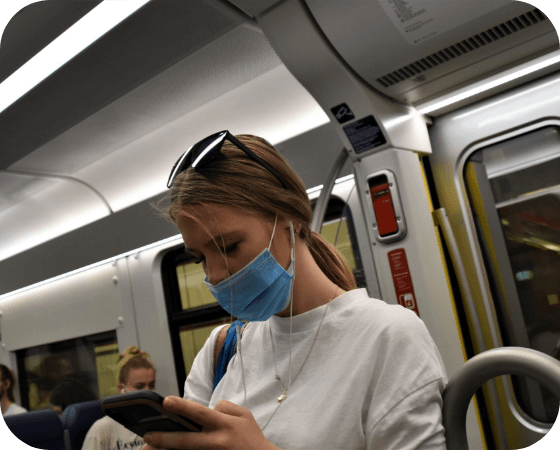
On Wednesday, the Department of Justice (DOJ) filed an appeal to the US District Court ruling that overturned a Centers for Disease Control and Prevention (CDC) requirement for masks to be worn on transit, airplanes, and other transportation-related settings.  After Judge Kathryn Kimball Mizelle ruled on Monday that the CDC had exceeded its statutory authority on the travel mask mandate, the CDC asked the DOJ to file an appeal.  Of note, the DOJ declined to include a motion for stay in its appeal filing meaning the federal government will not be able to reinstate the travel mask mandate unless the ruling is overturned.   Since the court’s ruling on Monday, multiple airlines, public transit agencies, and transportation providers have announced that they will no longer require passengers to wear masks.

CMS Proposes New Policies on Health Equity, Maternal Health

In a proposed rule issued on Monday, the Centers for Medicare and Medicaid Services (CMS) outlined new policies intended to improve health equity and maternal health.  The proposed rule calls for adding three health equity measures to the new Hospital Inpatient Quality Reporting (IQR) Program that focus on addressing social determinants of health and assessing how a hospital is advancing health equity through strategic planning and data collection.  To boost maternal health, the rule proposes creating a new birthing-friendly designation for hospitals and would add two maternal health-focused quality measures to the Hospital IQR Program.  Comments on the proposed rule are due on June 17, 2022.

Moderna: “Bivalent” Vaccine Booster Provides Stronger Protection

On Tuesday, Moderna announced that its modified COVID-19 vaccine booster generated strong protection against multiple COVID-19 variants.  The company modified its booster shot to be “bivalent,” meaning that it combines a formula targeted for the original COVID-19 strain and a formula focused on the Beta variant.  According to preliminary trial results, the bivalent vaccine shot demonstrated efficacy against the Omicron variant and other COVID-19 variants of concern.  Moderna is still testing another bivalent vaccine with a formula targeted to both original COVID-19 strain and the Omicron variant, and results on this version are expected later in the spring.  However, the trial results have yet to be reviewed independently by scientists.

Cook Political Report Shifts 8 House Races Toward GOP

Eight Democratic-held seats in the House of Representatives are less likely to remain in control of Democrats after this fall’s midterm elections, according to the latest 2022 midterm ratings by The Cook Political Report.  The updated ratings bring the total of Democratic-held seats that are in the “toss up” category or trending Republican to 27, exacerbating Democrats’ fears of a brutal midterm election this November.  The ratings shift is welcome news for the Republicans, who only need to win five seats in this fall to regain control of the House.  The new ratings comes as President Joe Biden’s approval ratings hit the lowest level of his presidency, stoking more fear among Democrats’ regarding their electoral prospects this fall.

ICYMI: US Army Parachute Plane Prompts Evacuation of Capitol

On Wednesday night, the US Capitol Police (USCP) briefly issued, then withdrew, an evacuation alert for the US Capitol Complex after the Federal Aviation Administration (FAA) allegedly failed to inform the USCP of an aircraft flying in the vicinity of the US Capitol.  The aircraft in question was a part of the US Army’s parachute team and was participating in a flyover at Nationals Stadium, which is less than one mile from the Capitol.  The following day, Speaker Nancy Pelosi (D-CA) slammed the FAA for not informing the Capitol Police of the flyover and committed to a congressional review of what went wrong.  Pelosi also noted that Capitol personnel are still reeling from the January 6, 2021, attack on the US Capitol.

waldemar-brandt-U1AAh1Sjl3w-unsplash-1920x1366

A History of Annual Congressional Sporting Events

Many Americans love sports, and members of Congress are no different.  A few times a year, lawmakers from both parties gather to play games in a variety of sports with the goal of raising money for charities.  Here are some of the games where Representative and Senators have the chance to take a break from the usual grind of Washington and bring out their inner athlete.

Congressional Baseball Game

Founded in 1909 by a Pennsylvania representative who once played baseball professionally, the Congressional Baseball Game is the oldest of the lawmaker-centric sporting events.  In the game, which has been played at Nationals Park since 2008, Democrats and Republicans form different teams and play against one another.  Congressional staffers, lawmakers’ families, and even some presidents attend the game, which raises money for four charities: the Boys and Girls Clubs of Greater Washington, the Washington Nationals Dream Foundation, the Washington Literacy Center, and the US Capitol Police Memorial Fun.

Congressional Football Game

Started in 2004, the Congressional Football Game features members of Congress and former National Football League players facing off against the US Capitol Police.  An Arizona representative led the effort to start the annual tradition as a way to honor the memory of two Capitol police officers who died in a shooting in 1998.  The Congressional Football game raises money for three charities: the US Capitol Police Fund, Our Military Kids, and Advantage 4 Kids.

Congressional Women’s Softball Game

Sen. Susan Collins (R-ME), Sen. Kirsten Gillibrand (D-NY), Rep. Debbie Wasserman Schultz (D-FL) and several other female members of Congress started the Congressional Women’s Softball Game in 2009.  Each year, a team consisting of female lawmakers plays against women of the Washington, DC press corps.  The game primarily raises money for the Young Survival Coalition, which supports women under 40 who are diagnosed with breast cancer.

Congressional Soccer Match

Founded in 2013, the Congressional Soccer Match consists of separate teams formed by Democratic and Republican lawmakers that play against one another with help from some former professional soccer players.  Nearly all lawmakers who participate in the annual event are members of the Congressional Soccer Caucus.  The US Soccer Foundation hosts the annual match, which raises funds for several charity programs that help children in underserved communities.

Congressional Hockey Challenge

The Congressional Hockey Challenge began in 2009 from a weekly pickup match consisting of congressional staff and lobbyists.  Each year, members of Congress, congressional staff, and administration officials face off against lobbyists, and proceeds from the annual match go towards the Fort Dupont Cannons, USA Warriors Hockey, Capital Beltway Warriors, the Tampa Warriors, and the Professional Women’s Hockey Players Association.

mike-bowman-xKShyIiTNJk-unsplash1-1920x1280

Subscribe to Us Now!

Be a DC insider by getting our updates straight to your inbox