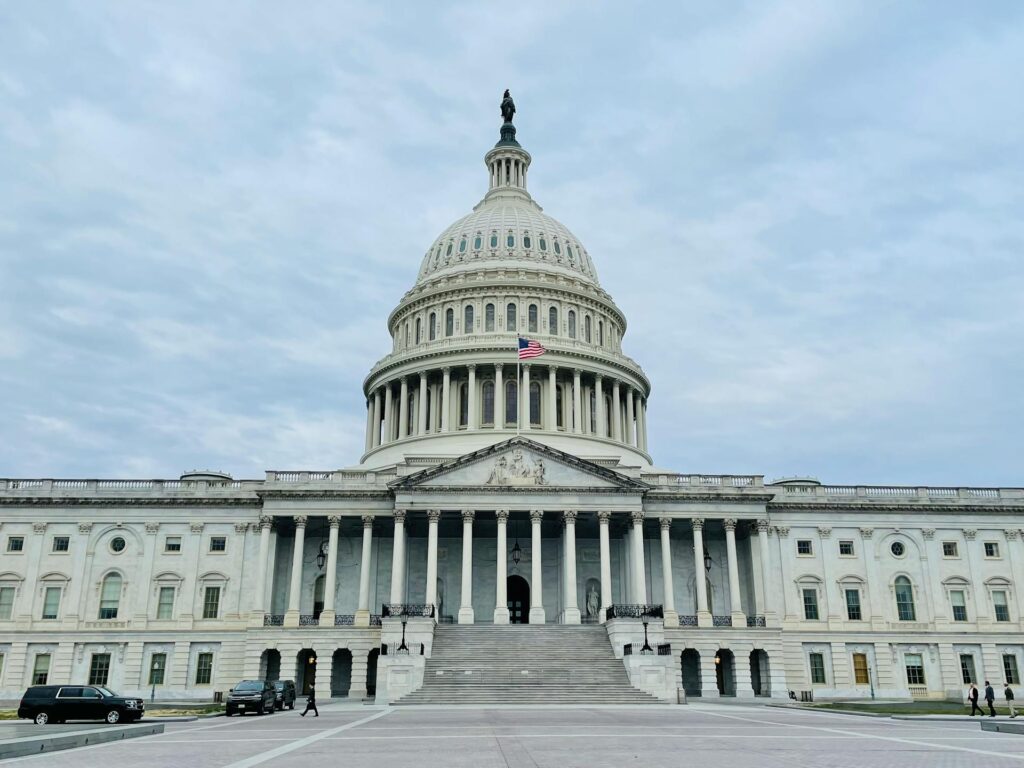
Well the Gamecocks of South Carolina finish their 10th undefeated women’s basketball season, beating the Iowa Hawkeyes in double digits. We have the men facing off tonight with Purdue being in the finals for the 1st time since 1969. And we have the only total solar eclipse in the 21st century where totality will be visible in Mexico, the U.S., and Canada EVER. It will be an amazing week in DC – let’s get to it!
The Administration
What’s Happening: Much like the players getting ready for the big game tonight, President Biden is getting ready for his upcoming rematch with former President Trump. One way he is doing that is by outlining his Administration’s positions on health care and contrasting those positions with the former president and Republicans. In the last two weeks, President Biden
- Published a document attacking the House Republican Study Committee’s Budget for cuts to Medicare and Social Security
- Hosted and spoke at a White House event on health care with Senator Bernie Sanders (I-VT)
- Held a campaign event in North Carolina and gave remarks focused on health care policy
Why It Matters: Polls show that the American people want to hear from 2024 presidential candidates about health care policy even if other issues may be ranked higher in importance. President Biden’s recent flurry of activity around health care tells us that he and his team are working to respond to that call. We expect this activity to continue, if not increase, as the campaign heats up.
Rule-o-Rama: Even though Congress has been on recess, the Administration has been busy publishing and finalizing several health care-related rules. Some highlights include:
- A rule with the goal of making it easier for eligible individuals to maintain Medicaid coverage during the unwinding process.
- A rule aimed at what the president has labeled “junk health insurance plans”
- The Contract Year (CY) 2025 Medicare Advantage and Part D final rule
- The 2025 Notice of Benefit and Payment Parameters final rule
Why It Matters: Rules finalized thus far have generally been focused on protecting and improving existing programs (i.e. the rule making it easier for individuals to maintain Medicaid coverage). However, what we find more interesting are the rules that have not been introduced such as the nursing home staffing mandate or the ban on menthol cigarettes and flavored cigars. We are watching to see if President Biden will try to score a few more regulation points before the final buzzer goes off and the other team can use the Congressional Review Act to more quickly undo recent agency action.
We also expect the Hospital Inpatient Prospective Payment Rule to come out in the next week or so. It will be interesting to see if CMS follows MedPAC’s advice to increase payments by market basket update plus 1.5% or if CMS will be more austere.
The Senate
What’s Happening: The Senate is skipping the warm-up drills and going right into the game his week with two prime-time hearings.
- April 9 – Senate Finance Committee Health Subcommittee Hearing: “Closing Gaps in the Care Continuum: Opportunities to Improve Substance Use Disorder Care in the Federal Health Programs.”
- April 10 – Senate Finance Committee Full Committee Hearing: “Bolstering Chronic Care through Medicare Physician Payment.”
Why It Matters: The Senate Finance Committee hearings both focus on issues which have garnered support from both sides of the aisle. This makes sense given how difficult it is to move partisan priorities with a divided Congress. Here are some things we will be watching for:
- Will committee members show support for efforts like those in the House to reform how physicians are paid under Medicare?
- Will the committee stay focused on physician payments or go off on tangents related to other Medicare priorities?
- Will the GOP members use the subcommittee hearing on oversight of SUD care to criticize the Administration’s efforts to utilize harm reduction strategies?
- Will Democratic members follow the White House’s line of attack against House Republicans for proposed reductions in opioid response programs?
Don’t Forget: Senate Finance is also expected to hold a hearing to examine the Change Healthcare cyberattack. Advocacy groups have been critical of UnitedHealth’s and the federal government’s response so far.
The House
A Ukraine funding bill is expected this week: Speaker Mike Johnson (R-LA) said he would introduce legislation this week to aid Ukraine in its war against Russia. The Senate passed $60 billion to support Ukraine in February but nothing has been resolved because of opposition in the House.
Will the Next Appropriations Chair Please Stand Up: House Appropriations Committee Chair Kay Granger (R-TX) announced she would be stepping down from her post after the completion of the FY24 appropriations bills. She sent a letter to Speaker Johnson asking that the GOP Steering Committee and Conference begin the process of choosing a new chair.
Why it Matters: Only 1 member has officially put his hat in the ring, Rep. Tom Cole (R-OK). However, Rep. Robert Aderholt (R-AL), who has seniority over Rep. Cole on the committee, has called for a time out in the selection process. Any delay over choosing a new appropriations chair has consequences, including:
- Time taken away from working on FY25 appropriations
- Time taken away from legislating on other issues, such as telehealth
What’s Happening on Health Care: The House Energy & Commerce Committee Health Subcommittee will hold a hearing on April 10 titled “Legislative Proposals to Support Patient Access to Telehealth Services.” Next week, we are looking ahead to a House Oversight Committee hearing on the FDA, where Commissioner Califf will testify.
Overtime: MedPAC and MACPAC Meet
Both MedPAC and MACPAC will be working on their June reports to Congress. These reports provide recommendations for improvements or innovations to the program. We will be especially interested in the following:
- MedPAC’s looking into telehealth and also Medicare physician fee schedule – just like the House
- MACPAC’s scheduled vote on Friday morning on recommendations for the June report to Congress
Here’s to a great week ahead – were you disappointed by Caitlin Clark’s loss even as she played amazingly, did you see the last eclipse in the US in 2017, are you looking forward to the Master’s golf tournament this week – let us know your questions and feedback!