Insights^

Find our analysis on legislation, regulations, MedPAC meetings, and more. 

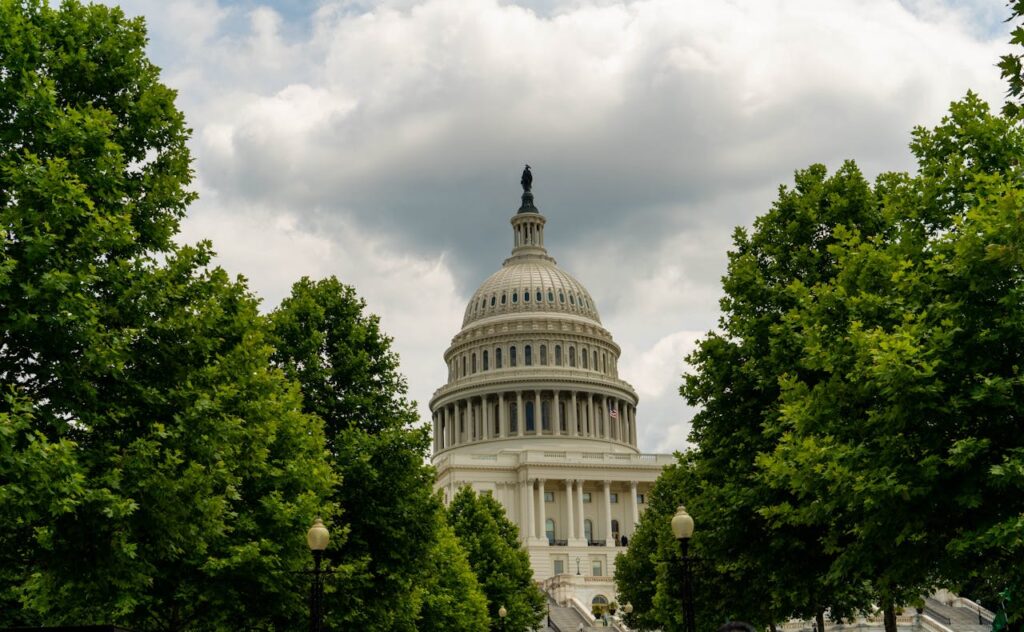
Bucking the Leadership: Tracking Congressional Departures

Rep. Ken Buck (R-CO) announced his plans to resign from Congress on March 22 rather than stick it out through the rest of his term.   While it wasn’t an earthquake that upset the balance of power, the announcement certainly sent tremors pointing to the increasingly challenging environment facing Speaker of the House Mike Johnson (R-LA) and Republican congressional leaders. Rep. Buck joins several other House GOP members on the list of resignations that have occurred this year. In conversations with the press, Buck hinted other similar retirements of House Republicans might be following. The current House Republican majority sits at 219 members to 213 for House Democrats. With Buck’s departure, that margin will shrink to 218-213. The margin will likely shrink to 218-214 when New Yorkers go to the polls on April 30 to select a replacement, likely a Democrat, for the recently retired Rep. Brian Higgins (D-NY).  

Hope for Bipartisanship  

All of these resignations and retirements from Congress come with numerous political and policy ramifications.  Beyond the spectacle of it all, the narrow margins and volatility, combined with a divided Congress, mean that now more than ever, there is a need for bipartisanship to find policy solutions that can actually become law. Congress recently showed that bipartisanship is not dead in Washington D.C. and one area where we are seeing it occur is in health care policy. Congress (narrowly) avoided a government shutdown with an appropriations bill that included a “skinny” health care package. This package included an increase to partially address Medicare physician reimbursement rate cuts and reauthorizations for several health care programs. Some stakeholders expressed disappointment in what was not included in the legislation, such as reforms to address concerns about the practices of pharmacy benefit managers (PBMs). However, this bill showed signs that partisans in Congress still share some priorities in the health care space.  A March 12 Energy and Commerce Markup of 19 bipartisan health care bills also provides  hope for moving bipartisan health legislation addressing a range of issues such as  maternal health, mental health, dementia care, cancer screenings, and more. Adding additional cause for hope were comments from Rep. Larry Bucshon, MD (R-IN), expressing a positive outlook for bipartisan legislation to address nagging issues facing physicians under Medicare.  

What this Means for Stakeholders Looking for Action 

The recent resignations and retirements from Congress make it unlikely we will see the “big health care stuff” passed before the election. However, the weeks and months ahead will be crucial in laying the groundwork for additional health care legislation, including possible payment reforms, PBM reforms, the addressing of varying reimbursement rates for hospitals, and providing for the mental health needs of physicians. If you have a priority health issue, the time is now for stakeholders to get their message out to lawmakers and congressional staff. If you have a such an issue and need to navigate both sides of the aisle, please feel free to reach out to our team; we would be happy to talk about how we can help. 
Bucking the Leadership: Tracking Congressional Departures

The Week Ahead: March Madness – Washington, DC Version

Let’s start with 3 questions about timing this week.  See if you can guess the answers! 

  • What happened on time?   Selection Sunday for the NCAA Men’s and Women’s Basketball Tourneys – one of our favorite events of the year! 
  • What happened early?  Cherry blossoms.  The National Park Service declared peak blooms hit on March 17 – the second earliest peak on record. 
  • What happened late? Well, sort of, we still don’t have a clear path to fund the government past March 22.  Better late than never?! 


The Administration 

Health and Human Services Sec. Xavier Becerra will makes a second set of appearances this week on the President’s Budget.  His testimony before the Senate Finance Committee last week touted the Administration’s efforts to lower prescription drug costs and increase the number of people insured under the Affordable Care Act.  Expect more pointed questions in the House Appropriations Committee about funding priorities and the House Ways and Means Committee about Medicare and health savings accounts on March 20. 


What hasn’t yet come up in these hearings is the Administration’s response to the cyberattack on Change Healthcare, a unit of UnitedHealth Group that processes 15 billion health care transactions annually and touches 1 in every 3 patient records.  CMS, the HHS Office of Civil Rights, and the Department of Labor have all sent out notices of assistance within their jurisdiction.  The American Hospital Association has indicated the response to date has been woefully inadequate. 


The Senate 

The mad dash this week is to make sure the government remains funded past March 22 and before both the Senate and House will go back to their states and districts for a 2-week district work period.  While appropriations leaders have been working through the weekend, there’s no paper yet.  


We will be keeping our eyes peeled for any updates on the AI front, as the Gang of Four was predicting releasing their lessons learned from the various AI Insight Forums held over the last few months.  While the leaders will release a set of findings and suggested direction, the work of legislating will be left to the committees. 


The House 

If it feels like déjà vu all over again, you’re not alone.  We have 1 week to go to fund 6 major departments including HHS, Education, Labor, Homeland Security, Defense, State, and Treasury.  Funding for Homeland Security is one of the sticking points.  We had been anticipating the possibility of certain health care policy riders being attached, such as pharmacy benefit manager reform, hospital price transparency, and community health center funding, but it looks like these proposals may have to wait until after the election. 


  • Don’t forget – Rep. Ken Buck (R-CO-4) is retiring on March 22 – shrinking the GOP majority to a mere 5 votes (218-213). The margin will likely shrink further when New Yorkers go to the polls on April 30 to select a replacement, likely a Democrat, for the recently retired Rep. Brian Higgins (D-NY-26).  


Besides Sec. Becerra’s appearance before the House Ways and Means Committee, we will be watching closely as the House Energy and Commerce Health Subcommittee rips into FDA’s controversial proposed rule to regulate lab developed tests on March 21. The full Committee may also be marking up a number of health and non-health bills. 


So, here we go – March Madness – DC style.  If you have a free minute, don’t forget that MedPAC and MACPAC sent up their annual March Reports to Congress!  If you remember being able to receive those pubs by mail, let us know….  


House Ways and Means Committee Discusses Rural Telehealth Access

On March 12, 2024, the House Ways and Means Committee held a hearing entitled “Enhancing Access to Care at Home in Rural and Underserved Communities.”   The hearing focused on solutions to increase access to telehealth in rural areas.

The Administration’s FY 2025 Budget Request

On March 11, 2024, the Administration released its FY 2025 budget request.  For the Department of Health and Human Services, the President is requesting a 1.7% increase in funding, or $2.2 billion.   Most of these requests cannot happen without Congressional action – so this budget can be considered a road map for the election and beyond.

The Week Ahead: President’s Budget Release and More

The daffodils are in full bloom in Washington and Congress and the administration are trying to make the most of the next 2 weeks before taking a break for the Easter holiday.  There’s a lot going on in DC, so let’s get to it!

The Administration

All eyes on are the President’s annual budget release which will set out the President’s priorities for the government heading into the November elections.

  • Pay attention to what the President is proposing that can be done through Executive Order or regulation vs. what needs Congressional action.  While the “dead on arrival” phrase is often used in Washington, some things will be deader than dead, if that’s a thing, but anything the President can do on his own is fair game.

On March 1, President Biden gave his third State of the Union address, leaning into issues that energize the Democratic base and remind viewers and voters of his accomplishments.  For health care, he:

  • promised to restore Roe v. Wade as the law of the land, noting how red states have restricted access to IVF
  • expressed his desire to extend the Medicare insulin cap at $35/month to those with commercial insurance
  • made the case for expanding the number of prescription drugs subject to Medicare negotiations beyond current law

The Senate

The Senate took a victory lap over the weekend by passing a package of 6 bills to fund the government through September, including the Food and Drug Administration.  Congress now has 2 weeks to figure out how to fund the rest of the government before the March 22 deadline to avoid a partial government shutdown.

  • As an aside, how many times have we typed those words – avoiding a government shutdown – in the last few years?  We’ve lost count….

With immigration remaining at the forefront, the next set of bills, including Defense, Homeland Security, and Health and Human Services, won’t come so easily.

For health care, the Senate Finance Committee will host Sec. Becerra for a discussion of the President’s budget on March 14.  Yes, there will be partisanship but that isn’t what most interests us….

  • Watch for Senators’ priorities as they comment on the budget – this shows what each is championing and what might be able to move forward yet this year.

The House

The House comes back to take up 11 bipartisan bills coming out of the Transportation and Infrastructure Committee under suspension of the rules. But partisan tensions are sure to resume later in the week as the House brings up a resolution denouncing the Biden Administration’s immigration policy.

For health care, the focus is on the committees this week.  On March 12, the House Energy & Commerce Committee will be meeting to markup and move 19 bipartisan health-related bills, covering a wide range of issues, including maternal health, dementia treatment, cancer screening and a host of other initiatives. One bill of note that has garnered considerable attention is the “Dr. Lorna Breen Health Care Provider Protection Reauthorization Act” (H.R. 7153), which seeks to raise awareness and provide resources to address the mental health issues facing the health care workforce.

Also, on March 12, the House Ways & Means Committee will hold a full committee hearing titled, “Enhancing Access to Care at Home in Rural and Underserved Communities,” which will include testimony from both patients and providers about the challenges in improving access to in-home care and to modernizing the delivery of care in rural and other underserved communities.

There You Have It

We at Chamber Hill Strategies, are counting down the days:

  • 10 days left of winter
  • 11 days till the men’s NCAA basketball tourney starts
  • 12 days to avoid a government shutdown

Subscribe to Us Now!

Be a DC insider by getting our updates straight to your inbox