Insights^

Find our analysis on legislation, regulations, MedPAC meetings, and more. 

What Happened, What You Missed: September 18-22, 2023

House GOP Momentum on CR Comes to a Halt

House Republican leadership scrapped a plan earlier this week to hold a procedural vote on a continuing resolution (CR) to fund the government after September 30 due to lingering opposition from hardline conservatives. Speaker Kevin McCarthy (R-CA) modified plans for a 30-day CR by capping Fiscal Year (FY) 2024 spending levels at $1.47 trillion and adding some border security measures as a means to win over Freedom Caucus members who were initially opposed to a stopgap funding measure. However, nine House Republicans declined to support the new CR proposal, which boosts the odds of a shutdown at the end of the month. Even if McCarthy’s stopgap appropriations agreement had succeeded in the House, his CR would have likely been dead on arrival in the Senate, which has taken a more bipartisan approach to FY 2024 spending.

Administration Revives Free COVID-19 Test Program

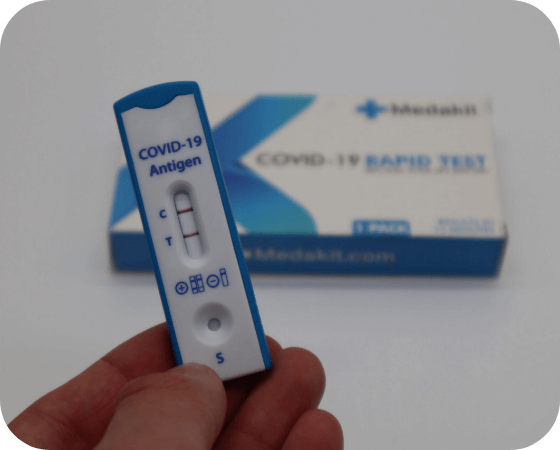
The Biden administration is bringing back a program that will allow Americans to order free COVID-19 tests ahead of a possible winter surge in cases. Starting on September 25, every US household can order four free COVID-19 rapid tests on COVIDtests.gov to be delivered directly to their home. According to the administration, the tests are able to detect the latest variants and are intended to be used through the end of 2024. To ensure the availability of tests, the administration is also providing $600 million to 12 manufacturers to produce 200 million tests. For the past three years, COVID-19 cases have peaked in January.

KFF: Most Nursing Homes Don’t Meet Proposed Staffing Requirements

Very few nursing homes in the US meet staffing requirements as proposed by the Biden administration, according to a survey from the Kaiser Family Foundation (KFF). The survey found that less than 20% of nursing facilities would meet the proposed staffing requirements at any time, although results varied across states. While all nursing facilities in Alaska would be able to meet the proposed requirements, only 1% of facilities in Louisiana would meet them. The recently proposed requirements call for facilities to have a minimum of 0.55 registered nurse (RN) and 2.45 nurse aide hours per resident day, as well as require facilities to have an RN on staff 24 hours per day, 7 days per week.

Poll: Americans Want More Controls on Opioids

Voters from both parties broadly agree on increasing control of opioids like fentanyl by enacting stronger border controls and punishing drug dealers, according to a Morning Consult poll. However, there were partisan differences with how to address the opioid crisis, with Republicans opposing harm reduction strategies like syringe services that Democrats tend to support. The poll also found that voters tend to see the opioid crisis more as a security issue than a health issue, which benefits Republican candidates who are perceived as stronger on security than Democrats. Voters who live in border states like Arizona, California, New Mexico and Texas were more likely to label the opioid epidemic as a security issue, according to the poll.

ICYMI: Senate Drops Enforcement of Dress Code

The US Senate will no longer enforce its dress code for senators, according to a recent announcement from Majority Leader Chuck Schumer (D-NY). The change was primarily made to accommodate Sen. John Fetterman (D-PA), who prefers to wear hooded sweatshirts and shorts. Senators from both parties and the Washington Post editorial board were quick to condemn the change, noting that it could lead to a slippery slope where lawmakers would eventually wear sports team apparel and clothing with inflammatory political statements on the Senate floor. However, the dress code will continue to be enforced for Senate staff.
medakit-ltd-yYhZuITR9Go-unsplash-scaled

Senate HELP Committee Marks Up Maternal Health and Provider Shortage Bills

On September 21, 2023, the Senate HELP Committee held a markup on bills to address maternal health care and the provider shortage.   Chairman Bernie Sanders (I-VT) opened the hearing by outlining how the U.S.  healthcare system is broken and Ranking Member Bill Cassidy (R-LA) “agreed with that diagnosis but disagreed with the prescription.” 

(Alprazolam)

The Weekly Update 9/18/2023

Good morning from Washington where in September there’s nothing like wearing long sleeves, jackets, and pants in the morning just to wear t-shirts and shorts after 1pm. The up and down weather is indicative of the topsy turvy nature of the current state of play of government funding. To demonstrate their ability to strengthen their hand in budget negotiations with the White House and the Senate, we reported last night that House Republicans are looking to vote on a short-term spending plan with little chance of passing the Senate – and now is facing an uphill battle in the House. In other news, President Biden authorized the Department of Homeland Security and FEMA to coordinate the disaster relief and assistance for communities impacted by the Lee aftermath which continued to knock out power and cause havoc this past weekend. In sports, week 2 of the NFL is almost complete with the New York football Giants making a fantastic comeback to redeem themselves from their embarrassing loss last week. Can Congress comeback from the literal and figurative deficit which they find themselves in – or is a shutdown a foregone conclusion?  Welcome to the Week Ahead!!

The Administration

President Biden is also facing a tough September with Republicans getting the go ahead to begin an impeachment inquiry, as well as the Auto Workers strike which President Biden thought would not happen. Biden continues to work to improve access in a variety of facets in healthcare – this time focusing on mental health parity. HHS issued proposed regulations focusing on addressing gaps in coverage of mental health by insurance companies compared to that of other care. The administration hopes the proposed regulations will make insurance companies comply with providing mental health coverage and is ready to impose hefty fines for those insurers who fail to comply. Insurers believe a lack of qualified mental health professionals is a key problem. The regulations are open to comment until October 2.

The Senate

For weeks we’ve spoken about the exemplary bipartisanship in the Senate as it relates to the appropriations process. Well, it appears that the smooth sailing has hit a rough patch. Senator Ron Johnson (R-Wis) is currently blocking a bipartisan amendment package relating to the $280 billion minibus (the package contains the FY2024 MilCon-VA, Agriculture-FDA, Transportation-HUD appropriations). The senator believes the bill should be voted on its individual components as opposed to one larger package. Majority Leader Schumer and Minority Leader McConnell will work to see if the package can come to the floor this week.

The Senate Health, Education, Labor, and Pensions committee will meet in Executive Session on Thursday to consider three bills: the Bipartisan Primary Care and Health Workforce Act, the Preventing Maternal Deaths Reauthorization Act of 2023, and the Gabriella Miller Kids Research Act 2.0.  The Senate Finance Health Care Subcommittee will meet on Tuesday to hold a hearing on “Aging in Place: The Vital Role of Home Health in Access to Care”.  According to staff, the hearing is framed around promoting aging in place through the lens of beneficiaries being able to access the Medicare home health benefit. The discussion will focus on some of the current barriers in Medicare and the relationship with Medicaid HCBS for duals. There will be a discussion on urban/rural differences and the costs to beneficiaries when there are access challenges. The Senate will also continue hearings on the use of artificial intelligence (AI) this week.

The House

House Energy and Commerce Chairwoman Rodgers’ price transparency bill, which we reported last week, is up on the floor tomorrow – but it remains to be seen how much Democrat support it will receive. The Senate will not take it up.

Energy and Commerce has a hearing scheduled Tuesday at 10 am on seniors’ access to innovative drugs and devices and it some PBM bills. Many of the bills are purely messaging and somewhat ironic given their cost and impact to the Medicare Trust Fund. Also Tuesday at 2 pm, is the Member Day hearing, where members will be able to air grievances and try to rally support for their pet projects. Many members on the health subcommittee will focus on cost, access, rural access, generic pricing, and the supply chain challenges of the drug and device ecosystems. Fentanyl proliferation and abuse mitigation will also be hot topics.

Ways and Means is holding a hearing on “Reduced Care for Patients: Fallout from the Flawed Implementation of Surprise Medical Billing Protections” and its impact on patients’ care and pricing. This hearing will be partisan, and the witnesses will have their work cut out for them as Democrats and Republicans will blame each other for the failed implementation and impact on pricing for their constituents.

The government funding (or lack thereof?) is the key piece, with Speaker McCarthy’s future as the usual bit of palace intrigue holding everything else in limbo.

Government Funding

As we reported last night, House Republicans have agreed to put a stopgap spending measure on the floor for this Thursday. However, the votes are currently not there within the Republican conference to get the bill across the finish line. The proposed CR is set to fund the government through the end of October, but it cuts government spending by eight per cent and does not include Hurricane Lee relief funding or funding for Ukraine requested by the President. The CR as it is currently drafted is being opposed by several Freedom Caucus Members and has no chance of passing the Senate. House Democrats will not support the package. With limited time remaining before a government shutdown, Congress continues to have an uphill battle in coming to a palatable CR which both sides will agree to before the funding deadline.

Create a great week!

matthew-bornhorst-wo7H4pBKo9A-unsplash1-1920x1442

What Happened, What You Missed: September 11-15, 2023

2022 Uninsurance Rate Drops amid Concerns about Underinsurance

The uninsured rate in the US dropped from 8.3% in 2021 to 7.9% in 2022, according to the US Census Bureau.  Overall, 27 states saw their uninured rates decline, while Maine was the sole state to see its uninsured rate increase.  Per the Census Bureau, the increase in insurance rates can likely be attributed to Medicaid expansion in several states, economic growth, and enhanced marketplace premium subsidies under the American Rescue Plan Act.  However, remains unclear if trends towards lower uninsured rates will continue in 2023 as millions face potential coverage losses due to Medicaid redetermination.  Additionally, some state officials are concerned that Medicaid beneficiaries who lose their coverage could enroll in short-term plans that would render them underinsured.

White House Announces $240M Investment in Cancer Moonshot

The White House announced plans to award $240 million to researchers working on cancer-related projects as part of a larger initiative to advance the Cancer Moonshot.  The awards will be focused on projects that develop new tools that allow early detection of cancer, create new ways to visualize cancer cells during surgery, and produce devices that can deliver treatments directly to cancer cells and tumors more effectively.  The White House also announced development of a new program to transform data accessibility across cancer research, as well as new efforts and resources related to smoking cessation.  The administration is hopeful that the new investments will inspire the next generation of cancer researchers.

CDC Advisors Approve New COVID-19 Booster

A Centers for Disease Control and Prevention (CDC) advisory panel vote 13-1 on Tuesday on a recommendation for everyone ages 6 months and over to get the updated COVID-19 vaccine this fall.  Instead of recommending vaccines only for high-risk populations, as other countries have done, the advisors opted for a universal recommendation to allow for an easier vaccine distribution process and to ensure better access to vaccines.  The updated vaccines target the XBB.1.5 Omicron subvariant, which was the dominant subvariant in early 2023.  While other subvariants have since become more prevalent, recently published data has shown the new vaccines elicit strong protection against the newer subvariants.  The new shots could become available as soon as this week in some parts of the country.

HELP to Review Bertagnolli’s Nomination for NIH Chief in October

The Senate Health, Education, Labor, and Pensions (HELP) Committee will hold a confirmation hearing next month on Dr. Monica Bertagnolli’s nomination for lead the National Institutes of Health (NIH), according to a recent announcement from Sen. Bernie Sanders (I-VT).  The announcement means the end of a months-long standoff where Sanders refused to move forward on the nomination until the White House released a plan on lowering prescription drug prices.  A surgical oncologist, Bertagnolli has been serving as the director of the National Cancer Institute since October 2022, and President Joe Biden tapped her for the top NIH role back in May 2023.  The NIH has been without a permanent leader since Dr. Francis Collins stepped down from the role in December 2021, and since then, Dr. Lawrence Tabak has been serving as acting director of the sprawling agency.

ICYMI: DC’s Coolest New Bar Is in…an Office?

The Distilled Spirits Council of the United States just moved its headquarters from downtown DC to Capitol Hill, and the organization’s latest digs feature an amenity nearly all advocacy organizations can’t claim: a 200-person capacity bar.  The council has already used the bar to host a meeting of the Congressional Bourbon Caucus and several fundraisers, and the organization plans to rent the space out for other events.  Of note, the bar contains an original George Washington-penned letter about the popularity of the first commander in chief’s whiskey.

adhy-savala-zbpgmGe27p8-unsplash-1920x1201

House Energy and Commerce Committee Digs into Drug Shortages

On September 14, 2023, the House Energy and Commerce Committee held a hearing on “Preventing and Responding to Generic Drug Shortages.”  The hearing centered around legislative proposals to try to address generic drug shortages in the healthcare market.

Subscribe to Us Now!

Be a DC insider by getting our updates straight to your inbox