Insights^

Find our analysis on legislation, regulations, MedPAC meetings, and more. 

When Will the Capitol Reopen to Visitors?

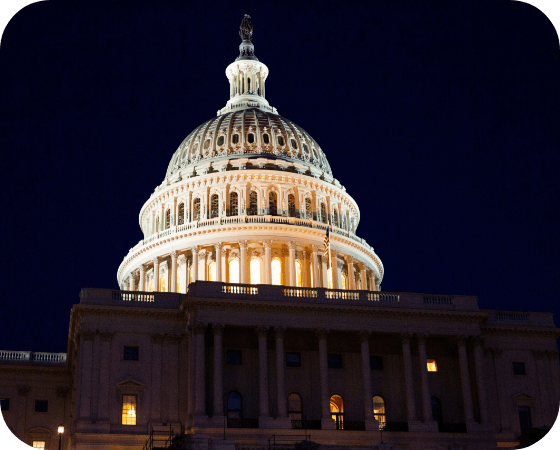
Washington, DC is coming back.  Since the Omicron wave has receded, the Smithsonian is expanding hours at its museums, foot traffic is picking up along K Street, and downtown bars are feeling a little more crowded during happy hour.  But one major exception to DC’s reopening is the US Capitol Complex, which is still largely closed to visitors.  As the rest of the nation continues to transition to a new normal, lawmakers and advocates are wondering when the Capitol will follow suit.

The Evolving Situation for Visitors

Since the Capitol was closed to the public in March 2020, congressional leaders have yet to publicly outline a reopening timeline.  While guests can currently visit members’ offices in the House and Senate office buildings, not just anyone can walk through the door.  All visitors to members’ offices must register in advance and require a member or staff escort upon arrival.  Additionally, both the House and Senate limits the number of visitors per group.

The reopening process has been off to a gradual start in the Senate.  In December 2021, the Senate reinstated tours for visitors, albeit with strict limitations in place.   Individual Senate offices are only allowed two 30-minute tours per week.  All tours must be staff-led, and only tours of up to six visitors each are permitted every half-hour between 9am and 3pm.  Additionally, tours are limited to the Crypt, the Rotunda, and the Brumidi Corridors.

The Senate took another step towards normalcy on March 1, 2022 when it passed by unanimous consent a resolution to reopen the Senate office buildings to the public.  Since then, lobbyists and other visitors have been able to meet in Senate offices on official business.

Calls to Fully Reopen Capitol Complex Grow

As jurisdictions across the country have loosened COVID-19 restrictions over the past few weeks, a growing number of lawmakers say it’s time for the Capitol to fully reopen to the public.  Sen. Gary Peters (D-MI)  is supportive of more broadly restarting Capitol tours, while Rep. Eleanor Holmes Norton (D-DC) called for the Capitol complex to reopen to visitors on March 8 to aid Washington, DC’s tourist economy.  Allowing more visitors on the Hill would align with work habits of congressional staff, who have been increasingly showing up to work in-person after nearly two years of working remotely.

External stakeholders are weighing in, too.  On March 9, the National Institute for Lobbying and Ethics sent a letter to congressional leaders to start  a dialogue with them on how to reopen the Capitol to the public without appointments.

Why reopen? Congress is an institution that serves the people.  Great strides have been made in advocating virtually, but it’s no replacement for developing relationships through in-person interactions.  By keeping lawmakers and their staff physically separated from the public, advocates are justifiably concerned that they’re limited in how they can communicate their message.

What Reopening Could Look Like

Fortunately for advocates, it appears that congressional leaders are at least thinking about allowing visitors to House offices and tour the Capitol more freely.  According to news reports, the Capitol will kick off its reopening on March 28 with a three-phase process lasting several months.

  • Starting on March 28, Phase 1 will see the limit on groups of visitors increase from nine to 15, along with the resumption of staff-led tours.  Additionally, school groups will once again be permitted to tour the Capitol, although these tours will be limited to 50 students.
  • Phase 2 begins on May 30, which will see a “limited reopening” of the Capitol Visitor Center.”
  • Phase 3 will bring a full reopening by Labor Day, although details are still being worked out.

It should be noted that reopening plans thus far are highly tentative, and the US Capitol Police and the House and Senate sergeants at arms offices are still hashing out the specifics.  A major reason why the reopening is being drawn out over the spring and summer is staffing problems with the Capitol Police, which is currently short hundreds of officers – the department’s training academy was closed during the pandemic, and hundreds of officers resigned following the January 6th riot.

Democrats and Republicans haven’t always been seeing eye to eye in discussions over how to reopen for the past few weeks.   On March 3, House Majority Leader Steny Hoyer (D-MD) outlined  some of his concerns during a somewhat tense colloquy with House Republican Whip Steve Scalise (R-LA).  During the colloquy, Hoyer said the Office of the Attending Physician and the Sergeant at Arms are looking into reopening “from a health and security standpoint.”  Hoyer didn’t offer a specific reopening timeline, simply stating, “as soon as we can do that responsibly, we ought to do that.”  Addressing security, Hoyer expressed a desire to have a “gun-free” and “weapon-free” Capitol once it reopens, and he implied the Republicans weren’t taking ramifications of the January 6th riot seriously enough.

Indeed, the security apparatus at the US Capitol Complex haven’t changed much since the deadly riots over a year ago.  The Fiscal Year (FY) 2022 omnibus appropriations bill contains additional funds to update security measures on the Hill and provide for more Capitol Police officers, but this measure was only signed into law days ago, and it will take time for the additional funds to translate into tangible security improvements at the Capitol.  Without new security measures in place, some Democratic lawmakers are still worried that the Capitol is vulnerable to another attack.

The decision to reopen the Capitol is a major step towards normal for lawmakers, advocates, and the general public.   Nonetheless, congressional leaders and the Capitol Police face a difficult job over the next few months as they try to balance the importance of allowing lawmakers to connect in-person with their constituents while addressing security concerns for all parties involved.
pexels-gotta-be-worth-it-5214897-scaled

What Happened, What You Missed: March 7-11

Biden Poised to $1.5 Trillion Appropriations Omnibus into Law

Late last night, the Senate voted 68-31 to pass a $1.5 trillion omnibus appropriations bill, which is now headed to President Biden’s desk to be signed into law.  The spending bill contains wins for both parties, with Democrats cheering a 7% increase in non-defense spending and Republicans touting a 6% increase in defense appropriations.  Additionally, the omnibus bill marks the return of earmarks to the appropriations process for the first time in over a decade.  However, getting the bill across the finish line was marked with challenges, including a contentious move to cut $15 billion in COVID-19 funding from the bill after a number of Democrats revolted against using pandemic relief funds already directed to states as a pay-for.

FY22 Omnibus Provides $1 Billion for ARPA-H

A notable highlight of the Fiscal Year (FY) 2022 omnibus appropriations bill is $1 billion in funding for the Advanced Research Projects Agency for Health (ARPA-H), a new agency that would be charged with accelerating biomedical breakthroughs.  The omnibus text stipulates that ARPA-H be within the Department of Health and Human Services but gives the HHS secretary 30 days to make the decision to house ARPA-H within another agency, such as the National Institutes of Health (NIH).  However, the $1 billion in funding falls far short of the President’s initial request for $6.5 billion. Next week, the Subcommittee on Health of the Committee on the House Energy and Commerce will hold a hearing titled “The Future of Medicine: Legislation to Encourage Innovation and Improve Oversight”, which includes  legislation that authorizes ARPA-H.

Voters Signal Support for Administration’s New COVID-19 Plan

According to a new Morning Consult/Politico survey, American voters largely approve of the Biden administration’s roadmap to address the COVID-19 pandemic.  For instance, 71% said they support giving people antiviral pills at pharmacies to people who test positive for COVID-19 and making improvements to ventilation systems in public buildings.  The positive feedback contrasts with the views of some public health experts and former Biden administration officials who say the administration’s latest plan doesn’t go far enough to address the threats posed by the virus.  While poll respondents from both parties agreed on most aspects of the administration’s COVID-19 roadmap, Democrats were more likely to support giving vaccines to other countries and strengthening data surveillance to protect the population against new variants.

Lawmakers Say It’s Time to Make Daylight Saving Time Permanent

Members of both parties signaled an interest in changing daylight saving policy during the House Energy and Commerce Subcommittee on Consumer Protection hearing on Wednesday.  Most parts of the country will set their clocks ahead one hour this Sunday, and a growing number of experts have been pointing out the negative health effects of shifting clocks biennially, such as accidents caused by the upset of circadian rhythms.  However, there was some disagreement among members of the witness panel over what specific action to take.  One law professor on the panel said there should be a permanent shift to daylight saving time to allow for as much light as possible in the early evening, while a neurologist said standard time should instead be permanent because it’s more in line with the body’s natural responses to light.

ICYMI: Smithsonian Shifts Away from COVID-19 Policies

Visits to the Smithsonian museums have been different for the last two years, with all kinds of requirements from indoor masking, online reservations, and to time limits spent at a museum.  Starting today, things will begin to feel a bit more normal as the Smithsonian museums and National Zoo drops their indoor masking requirement for visitors.  Additionally, the National Zoo and the National Museum of National History – two of the most popular Smithsonian institutions – will be open the public seven days a week for the first time since March 2020.  The Smithsonian is expected to expand its schedules at other museums in the coming weeks.

darren-halstead-WyDX5tLahLo-unsplash-scaled

How Is the Pandemic Changing Dress Codes on Capitol Hill?

It’s time to reopen the US Capitol to visitors, say a growing number of lawmakers.  Last month, 26 Republicans senators cosponsored a resolution to reopen the US Capitol and Senate Office buildings to the public, and Sen. Gary Peters (D-MI) said he’s supportive of restarting tours in the Capitol building.  Even external stakeholder are joining the call – the National Institute for Lobbying and Ethics sent a letter to congressional leaders today urging leadership to start a dialogue with them on how to reopen the Capitol to the public without appointments .

But Congress can’t reopen to the American people without staff members to take meetings and give tours.  Like a lot of Americans, congressional staff have spent most of the past two years working remotely while wearing casual, everyday attire.  What does this mean for the dress code once staffers return to in-person work in Washington?

Before the pandemic, congressional staff wore professional, business attire on days Congress was in session, while casual attire was permitted when Congress was in recess.

Since May 2021, staff have been gradually returning to in-person work in Congress, although the actual number of people in offices have shifted based on the surges of the pandemic ( for instance, in early January 2022the Office of Attending Physician urged staff to return to “maximal telework” due to a surge of the Omicron variant ).  Since then, DC-based staff have been dressing more casually in congressional offices, although some exceptions remain.  For example, professional attire is still the norm when appearing on the House or Senate floor or in a committee hearing.  Additionally, staff for congressional leadership like Speaker and the Senate Majority Leader also tends to lean professional. (Zolpidem)

It’s no surprise that most congressional staff reporting to work in-person can get away with more casual attire when they aren’t taking in-person meetings as congressional offices and the Capitol are still effectively closed to visitors.  Therefore, what does this mean for when the US Capitol Complex reopens to the public?

While the pandemic has shaken up many aspects of office life, dress codes on Capitol Hill aren’t likely to change significantly, at least for when Congress is in session.  Even though office workers throughout the US have been drifting towards casual clothing more and more in the years leading up to the pandemic, attire in the halls (and offices) of Congress have been slow to change.   Even amid the brutally hot summers of DC, congressional staff still make their way to Capitol Hill in suits.  Once visitors return to the Hill, staffers are likely to greet them in the kind of professional attire they would have seen pre-pandemic – albeit with some slightly casual tones.

nimble-made-SY0mVo-MRQ8-unsplash-scaled

What Would the End of the Public Health Emergency Mean for EUAs?

The current public health emergency (PHE) is set to expire on April 16.  While the Biden administration is likely to extend the PHE, administration officials have yet to comment on their specific plans.  Uncertainty over the end of the PHE has fueled conversations over what the implications would look like for temporary health care policies that expire once the PHE officially concludes.

Blog posts from the last two weeks have looked at how the end of the PHE would affect Medicare’s temporary telehealth waivers and Medicaid coverage.  This week’s blog post focuses on how ending the PHE would impact the Food and Drug Administration’s (FDA) emergency use authorizations (EUAs).

Background:  An EUA allows the FDA to authorize unapproved medical products or unapproved uses of approved medical products – like vaccines and treatments – to be used to diagnose, treat, or prevent serious or life-threatening diseases in cases where there are no adequate, approved, and available alternatives.  Since the start of the COVID-19 PHE on January 31, 2020the FDA issued hundreds of EUAs for pharmaceutical and medical devices related to COVID-19.

How? Section 564 of the Federal Food, Drug and Cosmetic (FD&C) Act allows the FDA to issue four different types of EUAs during a PHE for diagnostics, respiratory equipment, medical devices, and drugs/biologics.  However, the FDA still has the authority to issue an EUA outside of a PHE thanks to the Pandemic and All-Hazards Preparedness Reauthorization Act (PAHPRA) of 2013, which grants Department of Health and Human Services flexibility to declare that “circumstances exist” outside of a PHE to allow EUAs to be issued.

What does the end of the PHE mean for the EUAs?  Unlike the other temporary authorities related to telehealth and Medicaid, all EUAs that are issued by the FDA remain in effect until the FDA withdraws the EUA declaration.  For instance, the EUA declarations issued for the Zika and Ebola pandemics were never withdrawn and are currently in effect, even though their respective PHEs have long since expired.

However, one FDA policy, separate from EUAs, will expire at the conclusion of the PHE – enforcement discretion.  This policy allows the FDA to waive enforcement of its usual requirements for pre-market approval to allow drug products to be modified for additional uses without full approval from the agency.  In contrast, drug products approved via an EUA must still meet specific criteria on safety and effectiveness.  Once the PHE ends, the FDA will revert to its regular enforcement policies, and all products where enforcement discretion once applied must then meet all standard FDA legal requirements in order to continue to be sold in the US.

Planning for a Post-EUA Future

Unlike the EUAs for Zika and Ebola treatments, the FDA has communicated that it doesn’t want the COVID-19 EUAs to stick around forever and manufacturers should expect an “eventual resumption of normal operations.”  To this end, the FDA issued two draft guidance documents in late December to help facilitate a return to normal:

Uncertain Future for Stakeholders

On February 22, the FDA held a webinar for industry stakeholders about its draft guidance documents on its post-pandemic transition plans, and like their counterparts in telehealth and Medicaid, the stakeholders from the pharmaceutical and medical device industries had a lot of questions.

  • Of the four EUA declarations, three are specific to devices, and it’s not clear if the agency will withdraw those EUAs all at once or at different times.
  • The webinar did not offer stakeholders a clear answer on whether HHS issues the advance notice on withdrawing the EUA declarations first, or FDA will finalize its two guidance documents on its transition plans.   Instead, FDA staff told attendees that whatever happens first depends on the course of the pandemic.  If hospitalizations continue to decline and stay low, HHS may pull the EUA declarations first; otherwise, finalization of the guidance documents could come sooner.
  • The FDA says more guidance is on the way, but it’s unknown when it will be released.  According to FDA staff, this would pertain to the types of data FDA will consider when transitioning a drug product from an EUA to formal market access, such as how real-world evidence will be considered.

While pharmaceutical industry stakeholders can feel relieved that EUAs won’t expire with the end of the PHE and that the FDA is making plans for a post-pandemic world, question about what that world will look like simply add to the narrative that the federal government’s take on health care policies once the PHE ends need significant refinement.

mat-napo-qqyIX177sY0-unsplash-1920x1264

What Happened, What You Missed: February 28-March 4

White House Unveils New COVID-19 Strategy

On Wednesday, the White House unveiled a new pandemic road map that’s centered around four main goals: (1) protecting and treating against COVID-19; (2) preparing for new variants; (3) preventing business and school shutdowns; and (4) helping to vaccinate the rest of the world.  A key feature of the new plan is a “test to treat” system to be deployed to hundreds of pharmacies that will allow high-risk individuals to be provided antiviral pills free-of-charge if they test positive for COVID-19.  The plan is part of a broader initiative that centered around returning to a new normal while preparing for the possibility of new variants.  However, implementing the road maps largely depends on funding from Congress, and it remains unclear if the White House can win the support of Republicans who have been demanding more transparency on existing COVID-19 aid.

Senate Strikes Down Vaccine Mandate in Symbolic Vote

The Senate voted 49-44 on Wednesday in favor of a joint resolution to strike the administration’s vaccine mandate for health care workers.  Even though all Democratic senators, who were present for the vote, opposed the resolution there were too  many Democratic absences that Republicans were able to pass the measure by a party-line vote.  Many Republican lawmakers oppose the vaccine mandate because they say it is exacerbating the shortage of health care workers, especially in rural areas.  However, the resolution is almost certain to fail in the Democrat-controlled House, and the White House has already threatened to veto the measure.

Administration Announces New Nursing Home Safety Initiatives

On Monday, the White House announced new initiatives to make nursing homes safer, which included  minimum staffing levels, limits to the number of residents housed in a single room, and steps to improve inspections.  Additionally, the administration said it will increase fines at poorly operated nursing homes from $21,000 to $1 million.  Of note, the White House admonished private equity firms in its announcement for their alleged role in declining nursing home quality.  The announcement follows a difficult two-year period that exposed  the lack of safety measures in place for nursing homes and saw over 200,000 nursing home residents and staff die from COVID-19.  The administration will issue rulemaking over the coming months to carry out the initiatives, and it will ask Congress to provide nearly $500 million in new Medicare funding to boost inspections.

Inhofe to Retire Early Next Year

On February 28, Sen. James Inhofe (R-OK) announced he will retire from the US Senate on January 3, 2023, four years earlier than the end of his current term in 2027.  While the 87-year-old senator declined to provide a reason for his retirement, reports suggest his wife’s health may have been a factor.  Inhofe served as an Oklahoma state lawmaker and as Mayor of Tulsa before being elected to the US House of Representatives in 1986 and later the US Senate in 1994, where he went on to chair the committees on Armed Services and Environment and Public Works.   Inhofe is also an avid aviator and is the only member of Congress to have flown an airplane around the world.  Oklahomans will choose Inhofe’s successor in a special election this November.  Already, three Republicans have announced their intent to run in the deep-red state, including Rep. Markwayne Mullin (R-OK), former Inhofe chief of staff Luke Holland, whom Inhofe has endorsed; and Republican state Sen. Nathan Dahm.

ICYMI: Landmarks Across DC Show Support for Ukraine

Since Russia began its unlawful invasion of Ukraine over a week ago, countless buildings and landmarks across the Washington, DC area have been shining blue and gold lights in support of Ukraine.  Some of the buildings and structures to feature the colors of the Ukrainian flag include the Basilica of the National Shrine, the National Cathedral, the Frederick Douglass Memorial Bridge, the George Washington Masonic Temple, and the Kennedy Center.   Additionally, Ukrainian flags currently fly along Pennsylvania Avenue NW between the White House and the US Capitol.

martin-sanchez-Tzoe6VCvQYg-unsplash-scaled

Subscribe to Us Now!

Be a DC insider by getting our updates straight to your inbox