Insights^

Find our analysis on legislation, regulations, MedPAC meetings, and more. 

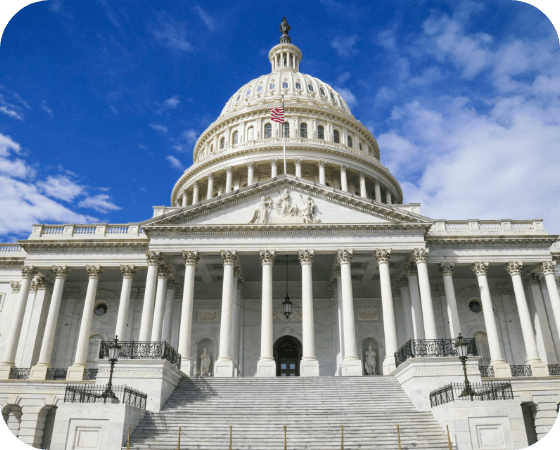
What’s the Point of Congressional Caucuses?

The Congressional Bourbon Caucus.  The Congressional Peanut Caucus.  The Congressional Rodeo Caucus.  It seems like there’s a congressional caucus for every type of issue or policy.  What exactly are congressional caucuses, and do they have any impact on the policymaking process?

All About Congressional Caucuses

Officially known as congressional member organizations, congressional caucuses are voluntary associations consisting of Representatives and Senators who share specific policy goals or interests.  These groups run the gamut of more serious and powerful organizations, such as the Congressional Black Caucus and the Republican Study Group, to ones with a more offbeat or narrow focus, such as the Congressional Bowhunting and Archery Caucus, and the Congressional Candy Caucus.  Importantly, these congressional member organizations are not to be confused with party caucuses and conferences, which are the House Democratic Caucus, House Republican Conference, Senate Democratic Caucus and Senate Republican Conference.

Congressional caucuses date back to the early 1800s and have grown in number in recent years.  There are currently 460 caucuses in the 117th Congress, compared to only 100 member organizations in 1993.   Any caucus that includes House members must register with the House Committee on House Administration and follow certain rules, which include the following:

  • Caucuses cannot use franking privileges (free mail privileges), although individual members may use official resources for communication related to a caucus.
  • At least one officer or chair of a congressional member organization must be a House member.
  • Members can use personal funds to support a caucus but are not allowed to accept goods or services from private organizations to support a caucus.

The Senate does not have any separate guidelines or regulations for Senators who participate in caucuses and are just subject to follow the Rules of the Senate and the Senate Code of Official Conduct,

Types of Caucuses

Congressional caucuses can fall into one of three categories depending on their constituency and interests.

  • Ideological Caucuses.  Caucuses based around an ideology can represent certain ideological views within a particular party.  In America’s two-party system, each party tends to have a wide ideological spectrum or a “big tent,” meaning there is room within a party for members with more specific ideologies to gather.  All ideological caucuses are in the House, and current examples on the Democratic side include the Blue Dog Coalition, the New Democrat Coalition, and the Congressional Progressive Caucus.  Republican examples of ideological caucuses include the Tuesday Group, the Republican Study Committee, and the Freedom Caucus.  One group, the Problem Solvers Caucus, contains House members of both parties that seek bipartisan collaboration on key issues.
  • National Constituency Caucuses.  Some caucuses advocate the interests of specific groups of constituents, such as women, racial or ethnic groups, and veterans.   Examples include the Congressional Black Caucus, the Congressional Hispanic Conference, the Congressional Asian Pacific American Caucus, and the Servicewomen and Women Veterans Caucus.
  • Interest Group Caucuses.  The most common caucuses consist of members with a shared policy or interest.  Examples of these generally bipartisan caucuses include the Congressional Bike Caucus, the Congressional Coal Caucus, the Congressional Dairy Farmer Caucus,  Congressional Fire Services Caucus, and the Congressional Cyber Security Caucus.  A number of interest group caucuses focus on medical issues or diseases, such as the Congressional Cystic Fibrosis Caucus, the Congressional Telehealth Caucus, the Congressional Lupus Caucus, and the Rare Disease Caucus.

Do Caucuses Matter?

On paper, caucuses have no real authority.  Unlike committees, caucuses lack the ability to markup bills or hire their own staff, for instance.  However, they do serve a function by providing a way for like-minded Representatives and Senators with mutual interests and goals to get to know one another.  Through these relationships and associations, caucuses members often work together to develop specific ideas that can become legislation.  During the 115th Congress and 116th Congress, members of the Problems Solvers Caucus periodically released proposals and legislation on important issues where caucus members believed Democrats and Republicans could find common ground.  For example, some of the Problem Solvers Caucus’s ideas eventually became law, including a proposal to repeal the medical device tax. At the moment, the Problem Solvers Caucus has been active during the 117th Congress around the bipartisan infrastructure framework.

Additionally, caucuses formed around diseases and medical issues are particularly active on creating health care legislation.  For instance, Reps. Diana DeGette (D-CO) and Tom Reed (R-NY), who co-chair the Congressional Diabetes Caucus, have introduced legislation to address high insulin prices and expand diabetes prevention programs.  Additionally, members of the Congressional Telehealth Caucus have introduced legislation to ensure some telehealth services temporarily expanded under the COVID-19 public health emergency are made permanent.

louis-velazquez-XWW746i6WoM-unsplash-1-1920x1280

What Is the Debt Ceiling, and Why Does It Matter?

On July 31, the federal government is scheduled to hit the debt ceiling, meaning it will no longer be able to borrow money.  Fights over the debt ceiling have been become increasingly common in recent years, and once again, lawmakers find themselves squabbling over what to do so the federal government is able to pay its bills.  If there’s anything Congress can’t do, it’s to take no action at all, as it would mean disastrous implications for both the US and global economy.

A Brief History of the Debt Ceiling

The debt ceiling, or debt limit, is a cap on the total amount of money the Department of the Treasury can borrow and is set by Congress.  The ceiling applies to nearly all debt accrued by the federal government, including over $21 trillion in debt held by the US public, and $6 trillion in debt the federal government owes itself for programs like Medicare and Social Security.

It should be noted that debt and deficit have different meanings.  The deficit refers to the difference between revenue the federal government takes in from taxes and other sources across each fiscal year, while the debt refers to deficits accrued across multiple years.

The debt ceiling wasn’t always around.  Originally, Congress signed off on all debt by authorizing individual bonds through legislation.  However, the cost of financing America’s involvement in World War I led Congress to establish a debt limit though the Second Liberty Act as a way to simplify the borrowing process and allow the Treasury Department to issue as many bonds as needed instead of waiting for Congress to approve every single bond.

In recent years, rising national debt and an increasingly polarized Congress have made the process of raising the debt ceiling much more contentious.   Parties have occasionally sought policy concessions from one another in exchange for agreeing to raise the debt limit, leading to a few occasions where political brinkmanship has actually caused the federal government to hit the debt limit and trigger debt ceiling crises in 1995-19962011, and 2013, when the government becomes uncomfortably close on defaulting on its debt.

Enacted in August 2019, the Bipartisan Budget Act of 2019 suspended the debt ceiling to its current level of $28.5 trillion to July 31, 2021.

What Happens If the Debt Ceiling Isn’t Raised?

During a June 23 appearance before a Senate Appropriations subcommittee, Treasury Secretary Janet Yellen said a failure to raise the debt ceiling would have “catastrophic consequences” and could potentially lead to a financial crisis.  Indeed, hitting the debt ceiling would mean the federal government would eventually be unable to make its debt payments after a certain period of time.  This would result in the government defaulting on its debt obligations, something that have never happened in US history.

With the government unable to pay its debts, millions of daily obligations including Social Security payments, salaries for federal civilian employees and military servicemembers, veterans’ benefits, utility bills, and others would be have to be at least temporarily defaulted.  Next, global financial markets would enter a state of turbulence, as both international and domestic markets rely on the stability of US financial instruments and the economy.  Additionally, interest rates would rise and the demand for Treasury securities would fall as investors begin to reconsider the safety of Treasuries and either pull back or stop investing entirely.  Higher interest rates would in turn have strong reverberations across the economy, impacting credit cards, mortgages, car loans, and other forms of borrowing and investment.

Even if the government doesn’t actually default on its debt obligations, the mere threat of default could result some negative economic consequences.  During the debt ceiling crisis of 2011, Standard & Poor’s downgraded the US credit rating from AAA to AA+ with the rationale that the debt limit fight was a sign of “America’s governance becoming less stable, less effective, and less predictable.”  During the 2013 debt ceiling crisis, credit agency Fitch warned it may cut the US credit rating due to political gridlock, and Chinese rating agency Dagong downgraded the US from A- to A.  In 2014, Fitch did however restore the US credit rating to AAA.

“Extraordinary Measures” to Stave Off Default

If the federal government does hit the debt ceiling on July 31, it won’t immediately default on its debt.  That’s because the Treasury Department can take so-called “extraordinary measures” that were previously deployed during the debt ceiling crises in 2011 and 2013.  Extraordinary measures are accounting maneuvers that allow the federal government to continue to borrow money and pay bills without exceeding the debt ceiling.  These measures usually involve not fully investing federal employees’ Thrift Savings Plan and civil service retirement plan funds in special Treasury securities.  For example, if federal employees have invested $100 billion in the Thrift Savings Fund, the Treasury could opt to issue only $90 billion to the fund, creating $10 billion that could be used to auction more debt to the public and raise more money for the Treasury.  After the debt ceiling is raised or suspended, investments in those funds would resume and lost interest is credited back to the accounts, leaving the savings and pensions plans unaffected.

But extraordinary measures only provide a temporary means for the government to pay its bills after the debt ceiling is reached, and it’s not clear how long the Treasury Department can exercise extraordinary measures after July 31.  According to a July 21 statement from the Treasury Department, the higher spending and revenues associated with the COVID-19 pandemic is driving uncertainty over how long extraordinary measures could allow the government to continue to meet its debt obligations.  For example, a July 21 report from the Congressional Budget Office (CBO) projected that extraordinary measures would probably run out sometime during the first quarter of the next fiscal year, which begins on October 1.  However, in a July 23 letter to Speaker Nancy Pelosi (D-CA), Yellen said there are scenarios where “extraordinary measures could be exhausted” soon after Congress returns from recess in early September.

What Will Congress Do?

As in the lead-up to previous debt crises, lawmakers in both parties generally agree on the need to increase the debt limit but have yet to settle on any specific proposals, such as raising the debt limit in a stand-alone bill or attaching a debt-ceiling increase to an annual spending bill. The most gridlock lies in the evenly split Senate, where Democrats have no path forward on attracting at least 10 Republican votes to overcome a filibuster on a measure to increase the debt ceiling.  In an interview with Punchbowl News on July 20, Senate Majority Leader Mitch McConnell (R-KY) threw cold water on any prospect of GOP support, saying “I can’t imagine there will be a single Republican voting to raise the debt ceiling.”  Just a day later, Sen. Lindsey Graham (R-SC) suggested Senate Republicans may seek policy concessions from Democrats on raising the debt limit when he pointed out that “about half the time the debt ceiling has been increased has been accompanied by something.”  Sen. John Thune (R-SD) later echoed Graham’s comments by expressing support for limits in discretionary spending, similar to approach used to resolved the debt ceiling crisis in 2011.

While Senate Democrats do have the option of bypassing the filibuster and adding a debt limit increase to the budget reconciliation process, doing so is fraught with challenges.  To use the reconciliation process, Democrats would have to add the debt ceiling increase to their $3.5 trillion infrastructure package, which is still under negotiation and would require unanimous support from all members of the Senate Democratic Caucus.  Additionally, the debt ceiling measure would require approval from the Senate parliamentarian, who decides what does and does not qualify for the reconciliation process.  Both the negotiation process and review by the parliamentarian would take up precious time, and the parliamentarian is not expected to rule on what can be included in the reconciliation process until after the Democrats pass their budget resolution next month.

Regardless, lawmakers know that something must be done about the debt ceiling.  However, if recent history shows us anything, it’s that the federal government can at times get a little too close to defaulting on its debt, creating tangible consequences like lower credit ratings.  Over the next few weeks, the public will be watching closely as lawmakers attempt to walk a fine line between averting an avoidable economic crisis and addressing the nation’s growing debt.

avery-evans-RJQE64NmC_o-unsplash-1920x1080

What Happened, What You Missed: July 19-23

CDC Panel Recommends Continued Use of J&J Vaccine, Despite Risks

On July 22, the Centers for Disease Control and Prevention (CDC) Advisory Committee on Immunization Practices (ACIP) agreed the federal government should continue to recommend Johnson & Johnson’s COVID-19 vaccine amid concerns of side effects.  According to the panel, the benefits of the single-dose vaccine outweigh the risk of Guillain-Barre, a rare neurological disease.  However, two members of the panel felt the risk of Guillain-Barre should be conveyed to potential recipients of the J&J vaccine, noting that two highly effective mRNA vaccines are available as alternatives.  ACIP convened just days after New York University researchers released a study that found the J&J vaccine is only 33% effective against the Delta variant, a significant decrease from the 66% efficacy observed against the original COVID-19 strain in clinical trials.

NEJM: Pfizer, AstraZeneca Vaccines Still Highly Effective against Delta Variant

study published in the New England Journal of Medicine (NEJM) on July 21 found two doses of Pfizer’s COVID-19 vaccine is 88% effective against the Delta variant, compared to 94% against the Alpha variant.  The same study found two doses of the AstraZeneca vaccine is 67% effective against Delta, a small decrease from a 75% efficacy rate with Alpha.  The release of the NEJM study findings come after a pair of studies released earlier this month found the Pfizer vaccine has varying degrees of efficacy against the Delta variant. Those studies include a research published by the Israeli Health Ministry on July 5, which found a double dose of the Pfizer vaccine to be only 64% effective against Delta, while an analysis posed on June 14 by Public Health England found two Pfizer doses to be at least 90% effective.

Major Hospital Groups Back Vaccination Mandates

On July 21, the American Hospital Association and America’s Essential Hospital separately issued statements urging its member hospitals to require vaccination for all employees.  According to both organizations, vaccines help protect not only health care workers but also patients and their communities.  The announcement comes as hospitals nationwide see a rise in COVID-19 patients who are unvaccinated and growing number of hospitals and health systems mandate their employees be vaccinated.

Details of Bipartisan Infrastructure Bill Could Come as Soon as Monday

A bipartisan group of 22 Senators are hashing out the final details of a $579 billion infrastructure bill that could be released as soon as Monday, July 26.  Senators previously attempted to begin debating the bipartisan infrastructure bill on Wednesday as a way to push negotiations forward, but Senate Republicans mounted a filibuster, saying more time is needed to finalize details and resolve differences.  Since Wednesday’s failed vote, Senators have tentatively agreed to delay a Medicare rule that eliminates Part D drug rebates that drug makers offer to pharmacy benefit managers in exchange for participation on their formularies as a way to partially pay for the infrastructure bill.  Remaining sticking points include how much spending should be directed to public transit and assurances that the Drinking Water and Wastewater Infrastructure Act will be fully funded.

ICYMI: No Smithsonian Tickets? No Problem!

Starting on July 19, visitors to all open Smithsonian museums will no longer need timed-entry passes for general admission.  The two exceptions to the new policy are the National Zoo and the National Museum of African American History and Culture, which already required timed-entry tickets before the pandemic.  Other currently shuttered museums, like the Air and Space Museum and Smithsonian Castle, are also set to reopen later this month.

daniel-schludi-mAGZNECMcUg-unsplash-1920x2400

What’s in the Surprise Billing Rule, and What Happens Next?

It’s the beginning of the end for surprise medical bills.  On July 1, the Biden-Harris Administration through the Department of Health and Human Services (HHS), the Department of Labor, and the Department of the Treasury (collectively known as the Departments), along with the Office of Personnel Management (OPM), released an interim final rule as a first step in implementing the No Surprises Act that was signed into law as part of the omnibus appropriations package in late 2020.  However, the regulations won’t go into effect until January 1, 2022, and stakeholders can provide comments by September 7.

What’s In the Rule?

Below are the provisions in the interim final rule that establishes new protections from surprise billing and excessive cost-sharing for consumers receiving health care items and services.

  • Surprise billing will be banned.  The interim final rule bans out-of-network charges for emergency services, regardless of location.  Providers are required to bill emergency services on an in-network basis without prior authorization. The rule also prohibits surprise billing for ancillary services at in-network facilities in all cases, including anesthesiology services.
  • Patients must consent to waive balance-billing protections. The rule directs federal agencies to establish a process to allow patients to waive their balance-billing protections and consent to out-of-network charges.  Notably, providers are not allowed to request patient consent in three scenarios: (1) The provider provides an ancillary service not selected by the patients, such as a radiologist or anesthesiologist; (2) there are no in-network providers available at the facility; or (3) the service is urgent or arises from unforeseen circumstances.
  • Insurers have 30 days to issue an interim payment or notice of denial from insurers. The interim final rule requires health plans to make an initial payment or issue a notice of denial to providers in 30 days after it receives a clean claim.
  • CMS must determine the qualifying payment amount. The rule calls on the Centers for Medicare and Medicaid Services (CMS) to define the qualifying payment amount (QPA), which will calculate patient cost-sharing and be used by an arbitrator in the independent dispute resolution process. The rule addresses several factors that will determine how the rates are set, including the type of contract, insurance market, geographic region, and rates for same or similar services.
  • Insurers must provide more transparency.  The interim final rule requires health plans to take several steps to promote price transparency and by requiring them to provide an advanced explanation of benefits, transitional continuity of coverage when a provider leaves the network, and access to accurate provider network directories.

What’s Next?

The interim final rule issued on July 1 is only the first step in a multipart regulatory process, as the Departments will need to issue two additional rules to fully enact the No Surprises Act.

By October 1, the Departments are required to put forth a rule on an audit process to ensure that plans and insurers are complying with the QPA calculation and requirement.  The audit may be performed by federal or state officials, depending on who is enforcing the surprise bill.  Enforcement follows the same rules as the Affordable Care Act, with the federal government tasked with enforcing self-insured group health plans, while states may enforce rules over non-group health plans and fully insured employer-sponsored plans.  The rule expected by October 1 will contain details on how the auditing process will work as well as how federal agencies will address enforcement.

By December 27, the Departments must outline through rulemaking the details of an independent dispute resolution (IDR) process that providers and health plans can opt for if they fail to reach an agreement on an out-of-network rate.  The IDR process is characterized as binding, baseball-style arbitration, meaning the arbitrator must select one party’s offer.  Federal regulators face the challenge of setting up an IDR process that’s considered fair but doesn’t cause providers and insurers to overuse the process and incur higher administrative costs.  The details of the IDR process have been debated repeatedly among stakeholders and are considered to be the most consequential part of the No Surprises Act.

What Are the Reactions?

Initial reactions to the interim final rule suggest the rule favors employers and insurers over hospitals.  The American Benefits Council, an organization who advocates for employer-sponsored plans, applauded the publication of the  interim final rule as it included many of the organization’s recommendations. However, the council noted that many key issues won’t be addressed until the release of the rule on the IDR process.  One fundamental issue the council cited is confirmation that either party participating in IDR can defer the QPA except in extenuating circumstances.  Similarly, the ERISA Industry Committee applauded the rule for “taking a firm stand” to protect Americans from surprise billing and address high health care costs.  In contrast, the California Medical Association said it has “serious concerns” about the new regulations, specifically as they pertain to the QPA, although the organization declined to specify its concerns.

adhy-savala-zbpgmGe27p8-unsplash-1920x1201

What Happened, What You Missed: July 12-16

CMS Proposes to Extend Some Telehealth Services through 2023

In its physician fee schedule for 2022, the Center for Medicare and Medicaid Services (CMS) proposed extending coverage for some Medicare telehealth services through the end of 2023.  Under the rule, CMS is proposing to remove certain statutory restrictions to allow patients in any geographic location and in their homes access to telehealth services for diagnosis, evaluation, and treatment of mental health disorders and allow for coverage of audio-only telehealth services to apply to counseling and therapy for opioid treatment.  The release of the proposed rule comes just one day after a group of bipartisan House Energy and Commerce Committee members sent a letter to Health and Human Services (HHS) Secretary Xavier Becerra urging the Department to make Medicare coverage for some telehealth services added under the public health emergency permanent.  Comments on the proposed rule are due on September 13.

Senate Democrats Reach Agreement on $3.5 Trillion Infrastructure Package

On July 13, Senate Majority Leader Chuck Schumer (D-NY) announced an agreement on a $3.5 trillion “human infrastructure” package after a meeting with Democrats on the Senate Budget Committee.  Major proposals include subsidized child care, national paid family leave, free community college, a host of climate change initiatives, and expanding Medicare coverage for vision, dental, and hearing services.  Democrats are hoping to pass the legislation through budget reconciliation, which would allow the bill to advance in the evenly split Senate with a simple majority.  However, it remains to be seen if the White House and Democratic leadership can count on all Senate Democrats to support the package, including moderate Democrats like Sen. Joe Manchin (D-VW), who is concerned about how the legislation will be paid for.

Drug Overdose Deaths Hit New Record in 2020

According to data from the Centers for Disease Control and Prevention, drug overdose deaths increased nearly 30% from 2019 to hit a record high of over 93,000 in 2020.  A contributing factor is the widespread use of fentanyl, which can halt breathing even if a small amount is ingested. Additionally, the pandemic played a significant role in the increase of deaths, strained health care resources, and made addiction treatment more difficult to obtain.

CMS Studying How Much Medicare Should Pay for New Alzheimer’s Drug

On July 12, CMS launched a National Coverage Determination analysis to determine whether and under what circumstances Medicare should cover Biogen’s recently approved Alzheimer’s drug Aduhelm. Aduhelm has attracted controversy for its high price tag of $56,000 and inconsistent efficacy in clinical trials. Furthermore, on July 15, a group assembled by the Institute for Clinical and Economic Review unanimously agreed that Aduhelm does not work better than existing Alzheimer’s treatments. However, CMS will propose a decision within six months and then allow stakeholders to comment within a 30-day period with CMS making a final decision three months later. Until then, Medicare Administrative contractors will be left to make coverage determinations for the Alzheimer’s drug.

ICMYI: Library of Congress Reopens to the Public

On July 15, the Library of Congress reopened to the public, marking a major step in reopening the US Capitol complex.  Visitors are required to get tickets online for a timed entry on Thursday, Friday, or Saturday, and face masks are required for all visitors regardless of vaccination status.  The library’s Thomas Jefferson building is considered an architectural gem and was modeled after the Pantheon in Rome.  However, it’s unclear when the Capitol itself will reopen to the public.

national-cancer-institute-cQ8FfVNvbew-unsplash-1920x1280

Subscribe to Us Now!

Be a DC insider by getting our updates straight to your inbox