Insights^

Find our analysis on legislation, regulations, MedPAC meetings, and more. 

Is There a Place for Earmarks in the FY22 Omnibus Package?

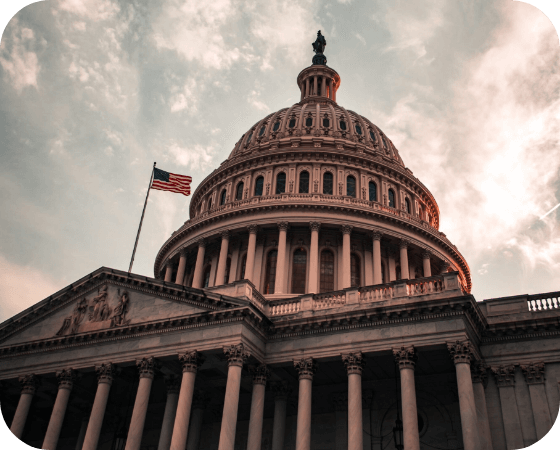
Earmarks returned to the appropriations process last year for the first time since Congress banned the practice over a decade ago.  However, as lawmakers keep kicking the can down the road on Fiscal Year (FY) 2022 appropriations with continuing resolution after continuing resolution (also known as a CR), the likelihood that these earmarks will make it into an appropriations omnibus for FY 2022 is looking less likely.

The Demise and Rise of Earmarks

Earmarks, or provisions inserted in appropriations bills directed for a specific project or recipient, exploded in practice throughout the 1990s and 2000s.  Earmarks gradually gained a bad reputation over time for their perceived role in adding to corruption or fueling “pork barrel spending,” which caused lawmakers to place a moratorium on the practice in 2011.

In the years since the ban on earmarks took hold, the appropriations process only got worse, with government shutdowns becoming more common.  To incentivize lawmakers to work together on spending bills – and ultimately reduce dysfunction in the appropriations process – the Select Committee on the Modernization of Congress issued a recommendation that earmarks should return, albeit with some changes to make the process more transparent.

In February 2021, House Democrats brought earmarks back to the appropriations process as Community Project Funding.  Unlike the earmarks of the past, House members are limited to 10 earmark requests and must declare that they have no financial connections to the projects they request.   Additionally, earmark requests are limited to schools, hospital, municipal authorities, and other non-profit organizations.

And in the Senate, earmarks returned in April 2021 under the moniker of Congressionally Directed Spending.  Senators must follow the same earmarks rules as their counterparts in the House, with the exception that they can make an unlimited number of requests.

Earmarks and FY 2022 Appropriations

Members of both parties have made earmark requests since the start of the FY 2022 appropriations process, although activity is much higher among Democrats than Republicans.  In the House, over 220 Democrats requested funding for more than 2,000 projects, while 108 Republicans issued requests for over 700 projects.  In the Senate, a total of 60 Senators, 44 Democrats and 16 Republicans, have submitted earmarks to be included in an omnibus package.

However, none of these earmarks will fund their intended projects until Congress finalizes appropriations for FY 2022.  The current CR to fund the government expires in less than two weeks, and there are still major disagreements between both parties that include policy riders over controversial issues like the Hyde Amendment, disagreements over parity between defense and non-defense spending increases, and finalizing topline spending levels.   In anticipation of continued gridlock, congressional leaders introduced on February 7 a new CR that would extend the government funding deadline from February 18 to March 11.

However, the longer it takes lawmakers to agree on an appropriations omnibus for FY 2022, the less likely earmarks will be included.  Many Republicans are still concerned about the optics of earmarks, and many top Republicans in the House and Senate opted not to make earmark requests last summer when the FY 2022 appropriations process began in earnest.  As discussions on major sticking points continue, congressional leaders may simply decide to strike community funding or congressionally directed projects from an omnibus, especially if they make it harder to reach a final compromise.

A Year-Long Continuing Resolution?

Additionally, concerns are growing that Congress could ultimately settle for a year-long CR – which means earmark might not have another shot at getting funded until the FY 2023 appropriations process is underway.

Of course, lawmakers could still reach a deal, and earmarks could ultimately make their grand return in a 2022 appropriations omnibus.  Members of Congress who submitted earmark requests know their projects will remain unfunded until a deal is reached regarding FY 22 funding, and therefore they could be incentivized to break the gridlock in the near-term.

Additionally, with the Democrats hitting pause on passing some version of the Build Back Better Act  could mean Republicans aren’t  as sensitive to a compromise appropriations bill that calls for big spending increases.  But as Republicans don’t have as much skin in the game on earmarks as Democrats, there is no reason to believe Congress will hang its hat on earmarks being the saving grace on passing an omnibus package, which means the possibility of a year-long CR looms larger by the day.

However, even if FY 2021 spending levels are sustained through September 30, 2022, the practice of including earmarks in future appropriation cycles aren’t out for the count.  There’s no reason to suspect the House and Senate won’t include Community Project Funding or Congressionally Directed Spending in the FY 2023 appropriations process, meaning advocates have plenty of time to prepare to lobby for projects in the next appropriations cycle.

kyle-mills-2pxjS57_axE-unsplash-scaled

What Happened, What You Missed: January 31-February 4

Biden Reboots Cancer Moonshot with Ambitious New Goal

President Joe Biden announced on Wednesday that his administration is relaunching the Cancer Moonshot with the ambitious goal of halving the nation’s death rate from cancer over the next 25 years.  To accomplish this, the White House is forming a “Cancer Cabinet” consisting of representatives from several cabinet-level agencies and urging more Americans to get screened for cancer.  Biden also called on Congress to pass proposals that create and fund the Advanced Research Projects Agency for Health (ARPA-H), which would drive innovation in biomedical research.  President Biden initially helmed the Cancer Moonshot when former President Barack Obama first formed the initiative back in 2016.

Pfizer Asks FDA to Authorize Vaccine for Kids under 5

On February 1, Pfizer formally requested that the Food and Drug Administration (FDA) issue an emergency use authorization (EUA) for its COVID-19 vaccine for children ages 6 months to 5 years old.   In an unprecedented move, the FDA urged Pfizer to request an EUA for its vaccine in order to address rising COVID-19 hospitalizations and deaths among children under 5.  Pfizer is currently testing a third COVID-19 dose in its clinical trials after data showed a two-dose regimen did not produce sufficient antibody protection in children ages 2 to 5, although it did in children ages 6 months to age 2.  By issuing an EUA for Pfizer’s COVID-19 vaccine before data on a third dose is available, the FDA hopes it can give parents a head start on vaccinating young children before a third dose can be approved.  If all goes well, children under 5 could start getting vaccinated by the end of the month.

CMS Emphasized Health Equity in 2023 MA, Part D Advance Notice

On Wednesday, the Centers for Medicare and Medicaid Services (CMS) issued its proposed Advance Notice for Medicare Advantage (MA) and Part D drug programs in 2023.  To promote equity, the notice includes a proposal for a new quality measure for its star ratings that assesses how often health plans screen for social determinants of health like transportation and food security.  Additionally, the notice seeks input on how MA payment impacts care provided to underserved populations in rural or urban areas.  Comments are due on March 4, and the final Advance Notice will be released no later than April 4.

CR Becomes More Likely as Government Funding Deadline Looms

Congress  failed to reach an agreement this week on a Fiscal Year (FY) 2022 omnibus appropriations agreement, increasing the likelihood that lawmakers will resort to a continuing resolution to keep federal agencies open beyond the February 18  funding deadline.  While lawmakers started the week with a sense of optimism that they could find a consensus on topline funding levels, policy riders over controversial issues like the Hyde Amendment and disagreements over parity between defense and non-defense spending increases kept both parties from reaching a deal.  Fortunately, however, the odds of a government shutdown later this month remain slim.

ICYMI: “Racing President” Is the Hottest Job Vacancy in Washington

The Washington Nationals, DC’s Major League Baseball team, posted a job announcement this week that’s calling on eager fans to be one of its Racing Presidents.  The team currently has six presidential mascots – George Washington, Thomas Jefferson, Abraham Lincoln, Teddy Roosevelt, William Howard Taft and Calvin Coolidge – who race against one another halfway through the fourth inning.  To be considered, applicants must be between 5 foot 7 inches and 6 foot 6 inches tall and able to run about 200 years in a 50-pound costume.  The ideal candidate is also expected to “uphold team values” and hold a GED or high school diploma.

national-cancer-institute-sbW1T0Yfz8k-unsplash-1

Has Massachusetts Found a Way to Stop Rising Health Care Costs?

The United States has the most expensive health care system in the world, and it’s only gotten more expensive since the COVID-19 pandemic started.  In response to high health care prices, states are looking for new ways to curb spending growth, which includes legislative and regulatory ways.  In Massachusetts, a regulatory body has taken a bold approach to tackling high health care costs that could serve as a model for other states.

What’s going on in the Bay State? The Massachusetts Health Policy Commission is an independent state agency that’s charged with monitoring health care spending growth in the state and to provide recommendations to make a more equitable and transparent health care system.  The commission also reviews the cost impact of proposed mergers and acquisitions.   Each year, the commission sets a cost growth benchmark and measures payers and providers performance against that benchmark rate.

The Commission Takes Action

As a part of its regular analyses, the Health Policy Commission recently found that Mass General Brigham, the state’s largest hospital network, spent over $293 million more than  the state’s cost growth benchmark that is set at 3.1%  As a result, the commission voted unanimously to take the first-ever step to require the health care system to develop and implement a performance improvement plan that must contain specific cost-containing action steps, process and outcome metrics, savings goals, timetables, and other requirements.

High costs, high consequences.  The vote comes at a time when Mass General Brigham is planning a $2.3 billion dollar expansion that includes the creation of three new ambulatory care sites.  The commission’s analysis found that these expansions would boost health care spending by $46 million to a total of $90 million and lead to higher health insurance premiums.  The Health Policy Commission also found that other providers would lose between $150 million and $260 million in revenue each year by losing patients to Mass General Brigham.

What happened?  According to the Health Policy Commission, the system increased its coding severity to bill more, even though patients weren’t getting sicker.

Next steps for Mass General Brigham:  Within 45 days, the hospital network must provide a performance plan, submit a waiver, or request an extension.  The system also faces up to a $500,000 fine if it fails to take any action.  In a statement opposing the commission’s decision, Mass General Brigham said the commissioners failed to take into account “patient acuity” and the role of its academic medical centers in treating Massachusetts’ sickest patients.

Other states are paying attention as the Health Policy Commission’s unprecedented decision could be seen as a model for other states to lower health care costs.  And states are starting to take proactive steps  as health care regulators, which means other hospitals and health care systems could soon feel the heat.   In New England, Rhode Island has established inflation caps and diagnosis-based payments for private plans, which has already resulted in decreased spending growth, while a New Hampshire initiative to make hospitals publicly post their prices has led to a slight decrease in list prices.  Additionally, Pennsylvania is using a global budget system to help reduce cost growth among payers.

One reason why states may be taking the charge on addressing high health care costs is a lack of action to curb rising prices on the federal level, where many health care reform proposals have stalled or failed to gain traction.  However, it’s not uncommon for policies to successfully begin on the state level to gain the attention of federal lawmakers. Thus, some of the actions taken by the states could inspire the introduction of similar health care cost containment measures on a national scale.

hush-naidoo-jade-photography-ZCO_5Y29s8k-unsplash-1920x1280

What Happened, What You Missed: January 24-28

Bipartisan Senators Release Draft of Pandemic Preparedness Bill

On Tuesday, Senate Health, Education, Labor, and Pensions (HELP) Committee Chairwoman Patty Murray (D-WA) and Ranking Member Richard Burr (R-NC) released the discussion draft of legislation aimed at improving the nation’s response to pandemics.  Some of the draft’s key components include creating a 9/11 Commission-style task force to examine the response the pandemic, making the Director of the Centers for Disease Control and Prevention (CDC) a Senate-confirmed position, and authorizing new grants for genomic sequencing to detect new pathogens or variants.  The Senators requested feedback by February 4 to hopefully markup the legislation in the next few weeks.

NIH: It’s OK to Mix-and-Match COVID-19 Vaccine Doses

According to research published by the National Institutes of Health (NIH) on Wednesday, any combination of primary and booster vaccines against COVID-19 yields strong antibody levels.  The findings support a “mix-and-match” approach to COVID-19 booster that means people who received an initial vaccination regiment from one of the three COVID-19 vaccines granted Emergency Use Authorization (EUA) or approval from the Food and Drug Administration (FDA) can expect enhanced protection from an additional booster dose from any of the vaccines.  However, the study did not look into which mix-and-match approach might be the most effective. According to the CDC, only about 40% of Americans fully vaccinated against COVID-19 have received booster shots.

FDA Limits Use of 2 COVID-19 Antibody Treatments

On Monday, the FDA announced that it will curb the use of COVID-19 antibody treatments from Regeneron and Eli Lilly because they aren’t effective against the Omicron variant, which accounts for nearly 99% of COVID-19 cases in the US.  Now, only patients infected with other variants such as Delta will be able to use the antibody treatments from either company.  A third antibody treatment from GlaxoSmithKline and Vir Biotechnology remains effective against Omicron and continues to have full authorization from the FDA.  While the Department of Health and Human Services (HHS) has said that it will no longer distribute antibody treatments from Regeneron and Eli Lilly, the drugs could be fully authorized once again if proven effective against any future variants.

Supreme Court Justice Breyer Announces Retirement

On Thursday, US Supreme Court Justice Stephen Breyer announced that he would step down from the high court following the end of the 2021-2022 term in late June-early July.  For the past year, some Democratic members of Congress and liberal activists have been calling on the 83-year-old justice to retire so that President Joe Biden could nominate a younger, liberal justice to replace him.  Nominated to the Supreme Court by former President Bill Clinton in 1994, Breyer served as a clerk to Supreme Court Associate Justice Arthur Goldberg and taught at Harvard Law School before being nominated to the US Court of Appeals in 1980 under former President Jimmy Carter.  President Biden has since announced that he will nominate a Black woman to fill Breyer’s seat.

ICYMI: Bidens Welcome New Cat to White House

This week, the First Family welcomed a new White House resident: a two-year-old gray tabby cat named Willow.  First Lady Dr. Jill Biden first met Willow in 2020 during a campaign stop in her hometown of Willow Grove, PA, where the young kitten jumped on stage as Dr. Biden was speaking.  Willow will become the first cat to live in the White House since India, President George W. Bush’s cat, in 2009.  The new cat won’t be the only White House pet – last month, the Bidens adopted Commander, a German shepherd puppy.

fusion-medical-animation-rnr8D3FNUNY-unsplash-1920x1080

Why More Lawmakers Are Looking into E-Bikes

E-bikes are really important, at least according to Democrats on the Hill.  Their $1.75 trillion Bill Back Better Act included a 30% refundable tax credit on the purchase of certain e-bikes, which Democratic lawmakers say are crucial to efforts to address climate change.  Considering that e-bikes only arrived on the scene a few years ago, how did they become popular enough to become a part of the Democrats’ climate change agenda?

Explaining e-bike’s popularity: Electric bicycles, which use a battery-powered electric motor to assist with propulsion, have exploded in popularity during the pandemic.  For instance, e-bike sales jumped 145% from 2019 to 2020, more than double the rate of tradition bicycles.  While it’s no surprise that more people would look to bicycles as a safe, outdoor transportation option in the midst of a pandemic, e-bikes offer many advantages that explain their popularity.

  • A perfect middle ground between walking and driving.  People are more likely to walk or use a traditional bike for short trips of no more than a mile or two and drive for trips consisting of more than six miles.  For everything in between, e-bikes offer an additional comfortable, convenient option.
  • A more sweat-free experience.  A bicycle trip lasting even a few miles will cause most cyclists to break a sweat, especially in locations that have high temperatures.  That’s why many commuters who use traditional bikes take advantage of showers at the workplaces whenever possible.  However, most e-bike users can arrive at their destination without being drenched in sweat thank to the assistance offered by the electric motor.  E-bikes also make it easier to conquer a hill or travel on a windy day compared to regular bikes.
  • The price is nice.  While e-bikes are more expensive than regular bikes, their price has dropped considerably in recent years.  E-bikes can now be found for between $1,000 and $1,500, while traditional road bikes usually cost $350-700.  And considering the average cost of a new car topped $46,000 in 2021, e-bikes offer a substantially better value proposition than their four-wheel counterparts.  This value proposition improves even more when accounting for the cost of fuel, insurance, and maintenance.

Why are lawmakers so interested in e-bikes?  Simply put, Democrats want more Americans to use e-bikes because they provide a more climate-friendly transportation option than gas and electric cars. Most of the time, carbon sources power the batteries used in electric car motors. And even if an electric car is being recharged with green sources, like wind and solar, electric cars still require significant energy to build and maintain. Therefore, e-bikes are one-way Americans can reduce their climate footprint as climate advocates say greater e-bike usage will be even more impactful in fighting climate change due to e-bikes producing less carbon emissions.

It’s not just the environment. An increased use of e-bikes can have a  positive outcomes for health equity and safety, too.  By encouraging people to drive less, e-bikes would mean less cars on the road, making streets safer for pedestrians and cyclists.  Additionally, the refundable tax credit can make an e-bike more affordable for individuals who need more accessible transportation options. Many low-income Americans, who often live in communities far from employment opportunities and grocery stores, need more options to access jobs and nutrition sources through transportation, which also addresses a key social determinants of health.

Will e-bike tax credits become a reality?  Democrats are looking to revive BBB – or at least a watered-down version – that at minimum won’t include the expanded child tax credit and federally subsidized community college.  It remains uncertain whether e-bike tax credits will remain in a revived, “skinny” BBB, however, given the growing interest in e-bikes among Democratic lawmakers and the American people, the conversation over providing tax credits isn’t going away anytime soon.

wolfram-bolte-V1vVp4uggy4-unsplash-scaled

Subscribe to Us Now!

Be a DC insider by getting our updates straight to your inbox