Insights^

Find our analysis on legislation, regulations, MedPAC meetings, and more. 

The Intriguing History behind Presidential Turkey Pardons

Last Friday, President Joe Biden pardoned two turkeys named Peanut Butter and Jelly from Jasper, Indiana. Turkey pardons at the White House have been happening for as long as many of us can remember, but the tradition didn’t just appear out of the blue. When did the Commander in Chief start liberating turkeys, and what happens after the turkeys are pardoned?

Origins of the Turkey Pardon

The earliest example of a turkey getting its freedom at the White House goes back to Abraham Lincoln. In 1963, the Great Emancipator spared a turkey that his family planned to eat for Christmas at the urging of his son Tad. The turkey remained as Tad’s pet for at least another year.

Over the following decades, turkeys were occasionally donated to the president as gifts. Starting in 1873 during the presidency of Ulysses S. Grant, a Rhode Island man named Horace Vose gifted a turkey to the White House for Thanksgiving and kept up the tradition for the next 40 years.

By the time Vose died in 1913, the tradition of sending turkeys to the White House had gained visibility, and other organizations took up the opportunity to continue the tradition. In 1921, the American Legion sent a turkey to President Warren G. Harding, and in 1925, First Lady Grace Coolidge accepted a turkey from the Vermont Girl Scouts. In 1947, the National Turkey Federation took ownership of the tradition when it sent President Harry S. Truman a Thanksgiving turkey.

However, the first turkey to be set free on Thanksgiving was in 1963, when President John F. Kennedy granted a “reprieve” to a turkey sent to the White House. During the presidencies of Richard M. Nixon and Jimmy Carter, turkeys were occasionally spared and sent to live on a farm or petting zoo.

Use of the term “presidential pardon” did not come until 1987, when President Ronald Reagan jokingly used the term in a turkey presentation ceremony. During the ceremony, Reagan quipped that he would pardon the turkey in response to a question from ABC News reporter Sam Donaldson on whether he would pardon Oliver North and John Poindexter, who were at the center of the Iran-Contra scandal. Since Reagan, every US president has maintained the tradition of pardoning a turkey on Thanksgiving.

The Turkey Selection Process

The National Turkey Federation has managed the turkey selection process for nearly 75 years. The White House turkeys are raised in the same manner as other turkeys bred for consumption and are typically raised on the farm of whoever currently chairs the National Turkey Federation.  From an initial flock of 40-80 turkeys, a group of 20 is selected based on size and tameness. Handlers then familiarize this group with human contact and music so the turkeys are accustomed to the noises and sounds of a White House ceremony. This group of turkeys are then winnowed down to two finalists who are sent to Washington for the pardoning ceremony.

What Happens to the Pardoned Turkeys?

All pardoned turkeys go to a pen specifically built for them at George Washington’s Mount Vernon estate. The pen includes a small coup to protect the turkeys from the elements plus an area where tourists can stop by to view them.

Unfortunately, however, the turkeys don’t stick around Mount Vernon for too long. Since the turkeys are bred for consumption, their high-protein diet increases their weight to the point that it puts undue stress on their organs, meaning the turkeys only live for another year or two at most after their pardon.


jonathan-cooper-Rd2l_qU1gGg-unsplash-1920x1280

Are High Housing Costs Bad for Your Health?

Housing prices have reached new heights, and after a brief pause, rent is once again climbing.  Not only are record-high housing costs bad for your wallet – they can be bad for your health, too.

Snapshot of America’s housing market: The median sale price for a new home in September 2021 was $408,800, compared to $217,000 in September 2011.  In Washington, DC the median price for all housing types in the city reached a new record-high of $705,000 in October 2021, while the median for all types of housing in the entire DC-metro area was $535,000, a 7% increase from last year.

  • It’s not just expensive coastal cities: Housing prices across the Sun Belt have been shooting up, too.  The median sale price of home in the Austin, TX-metro area hit $480,000 in July 2021, up 37% from the previous year, while the median sale price for a home in Nashville, TN reached $368,567 in September 2021, an 18.8% increase from September 2020.

Why? Supply and Demand

The biggest reason Americans are facing skyrocket housing prices is due to a lack of homes on the market.  Half as many homes were built in 2010-2020 as there were in the previous decade, and the US entered 2020 with a shortage of 2.5 million housing units.  Exacerbating the low supply of housing is an uptick in demand that’s being driven by record low-interest ratesremote work opportunities, and interest from millennials.

Housing as a Social Determinant of Health

Social determinants of health, or the economic and social conditions that influence health outcomes, are receiving more attention from the health policy world than ever before.  In addition to employment, education, and access to food, housing is a top social determinant of health, and numerous studies show a strong relationship between housing and health.

  • Mental health: People who pay more than 50% of their income on housing costs such as rent are more likely to experience depression and substance use disorders than those with more stable housing situations.
  • Physical health: Access to affordable housing has been attributed to better cardiovascular health outcomes, including lower blood pressure, lower cholesterol, and lower rates of prescribed blood pressure medication.
  • Health equity: Racial and ethnic minorities are more likely to be extremely low-income renters.  Thus, the negative health outcomes associated with a lack of stable and affordable housing disproportionately affect communities of color.

What’s to be done?  While not a panacea, boosting the housing supply would mark a major step in addressing the nation’s affordable housing supply – and improving health outcomes for people who lack housing stability.  A major barrier to building more housing are zoning codes, which overwhelmingly limit new construction to single-family homes that take up more space than other types of housing and limit the overall number of new housing units that can be constructed.

Fortunately, reforming zoning codes to allow for higher-density construction to include more diverse housing types like apartments, townhomes, and accessory dwelling units has gained steam in recent years as a popular policy option.  Federal policymakers and lawmakers have noticed, and the Build Back Better Act currently includes more than $4.26 billion for a program to incentivize “streamlining regulatory requirements and shorten[ing] processes, [and] reform[ing] zoning codes.”

While building more residential units would be a major step in cooling rising housing prices, zoning reform won’t solve America’s housing affordability crisis overnight.  New construction is almost always more expensive than existing units, and labor shortages in the construction industry combined with a shortage of raw materials like lumber are increasing the prices for new construction homes more than normal. However, in the meantime there are some more immediate policy options that can provide housing stability including:

  • Housing vouchers, which public housing agencies provide to low-income families, the elderly, and the disabled to allow them to afford housing.  The Build Back Better Act notably includes $25 billion in new funding for housing vouchers.
  • Inclusionary zoning, which requires developer to set aside a certain number of housing units that are affordable to low- or moderate-income renters.  Jurisdictions can also offer a density bonus, or an allowance to build more units than would otherwise be allowed, to offset the cost of providing affordable housing.

America’s housing affordability crisis is deeply complex and has no simple solutions.  But without any major policy changes, the circumstances surrounding a major social determinant of health aren’t likely to change soon, and housing will continue to remain unaffordable for a large swath of Americans.

tolu-olubode-PlBsJ5MybGc-unsplash-1920x2330

What’s Changed for Open Enrollment 2022?

Open enrollment for 2022 kicked off on November 1, and it’s particularly consequential to President Joe Biden, who campaigned on building off the success of the Affordable Care Act (ACA) to expand access to health care coverage.  To deliver on these promises, open enrollment has undergone several key changes to make it more consumer-friendly for 2022.

  • First off, open enrollment is a month longer than the previous four years.  While open enrollment last year ended on December 15, 2021, for the upcoming plan year, it ends on January 15, 2022.
  • Plan enrollees can also expect record-low prices, thanks to an extension of ACA premium tax credits made possible by the American Rescue Plan.  According to the Biden administration, four out of five people can now find a plan for $10 or less per month.
  • Additionally, 2022 sees a major boost to enrollment assistance.  Plan enrollees for 2022 can now look forward to over 5,000 enrollment assisters and navigators, plus nearly 50,000 brokers and agents.  Notably, the Centers for Medicare and Medicaid Services relaunched a program that engages with local organizations to provide outreach and education.
  • The current open enrollment has a new focus on health equity.  The administration is rolling out new efforts to people who previously lacked access to coverage, and advertising is being conducted in several new languages: Chinese (Mandarin and Cantonese), Korean, Vietnamese, Tagalog, and Hindi.
  • Finally, more Americans than ever will be eligible for open enrollment 2022.  That’s because three states (Kentucky, Maine, and New Mexico) transitioned from state-run coverage to the federal exchange for 2022, bringing the total number of state-based marketplaces on healthcare.gov to 18.

What Do These Changes Mean for Enrollment?

For plan year 2021, enrollment reached a record high of 12.2 million people, which can be attributed to a special COVID-19 enrollment period that ended in most states in August 2021.  However, many Americans seem to be unaware of premium tax credits made possible by the American Rescue Plan.  According to an October 2021 poll by the Kaiser Family Foundation (KFF), only about a quarter of adults who are uninsured or buy their own insurance checked to see if there were eligible for ACA premium tax credits.

KFF currently estimates that nearly 11 million Americans are eligible for but not enrolled in subsidized ACA plans.  Despite a record number of enrollees in 2021, it remains to be seen if new outreach efforts, longer enrollment periods, and other changes brought into play for 2022 will be enough to attract more enrollees and continue to lower the number of uninsured individuals in America.

pexels-olya-kobruseva-7163953-scaled

What Happened, What You Missed: November 8-12

Pfizer Asks FDA to Authorize Its COVID-19 Booster Shot for All Adults

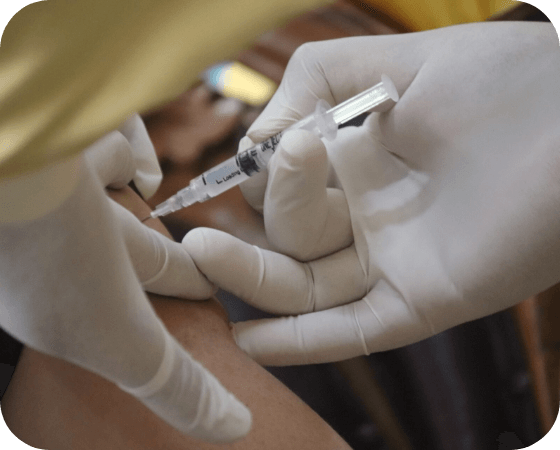
On November 9, Pfizer announced it’s asking the Food and Drug Administration (FDA) to amend its emergency use authorization (EUA) to allow all individuals ages 18 and older to get a third “booster” dose of its COVID-19 vaccine.  Currently, only individuals over age 65, people with chronic medical conditions, and at-risk workers are eligible to receive booster doses.  Pfizer also submitted data to the FDA from a Phase 3 clinical trial that found its booster shot is 95% effective against symptomatic COVID-19.  The request comes as more and more data suggests efficacy of currently approved vaccines wanes over time.

Federal Court Blocks Administration’s Vaccination Mandate for Employers

On November 6, a federal court in Louisiana block an emergency temporary standard (ETS) from the Occupational Safety and Health Administration (OSHA) that requires employers with 100 or more employees to develop a mandatory COVID-19 vaccination policy, with an exception for testing.  The 26 states are behind the lawsuit are making the argument that the Department of Labor lacks the authority to issue the rule and did not follow the correct procedure to issue the ETS.  The Department of Justice has vowed to fight the ruling in court.

CBO Says Congress Will Have to Wait for a Full Score on BBB Act

On Tuesday, the Congressional Budget Office (CBO) announced that lawmakers will have to wait some time for a final score on the Build Back Better (BBB) Act, Democrats’ social and climate spending bill.  In a blog post, CBO say it will provide a cost estimate for the full bill “as soon as practicable” and will provide advance notice once a release date can be determined.  CBO has taken a piecemeal approach to issuing cost estimates, and so far, only the titles for Science, Space, and TechnologyHomeland SecuritySmall Business, and Veterans Affairs have been scored.  Several centrist Democrats in both chambers including Sen. Joe Manchin (D-WV) and Rep. Josh Gottheimer (D-NJ) have said they will hold off on supporting the BBB Act until the CBO fully scores the bill.

Former New Hampshire Governor Nixes Senate Run

On November 9, former New Hampshire Governor Chris Sununu, a Republican, declared that he will not be running to represent the Granite State in the US Senate.  Many Republicans considered Sununu to be a top recruit against Sen. Maggie Hassan (D-NH).  Hassan, who won her seat in 2016 by a margin of only 1,017 votes, is considered to be one of the most vulnerable Senators.  Sununu’s decision is a setback for the Republicans’ plans to retake the Senate majority, as the party was already facing a difficult Senate map heading into 2022.

ICYMI: For the First Time, Tomb of the Unknown Soldier Opens to Public

This week, the Tomb of the Unknown Solider in Arlington National Cemetery allowed the public to walk on to the plaza and lay flowers for the first time ever to commemorate 100 years since an unknown soldier, who died in World War I, was interred at the tomb.  Visitors waited in line for hours this week for this opportunity to pay their respects, which has been under the watch of the US Army’s Old Guard for a century. This was a once-in-a-lifetime opportunity as the Arlington National Cemetery does not “anticipate holding another event in our lifetimes in which the public will be able to approach the Tomb in this manner.”

mufid-majnun-ruQ-_rc5tOo-unsplash-1920x1280

What’s the Biden Administration Doing about Opioids?

Drug overdose deaths in the US reached a record high of 93,331 in 2020, according to data from the Centers for Disease Control and Prevention (CDC).  Synthetic opioids including fentanyl played a major role, contributing to 60% of all overdose deaths.  While the opioid epidemic isn’t exactly new, the pandemic has certainly exacerbated the epidemic, causing an uptick in illicit drug use and driving many to use in isolation.  With the Biden administration currently focused on the COVID-19 pandemic, what’s being done to address the other public health crisis facing the nation?

New Drug Czar, New Focus on Opioids?

On October 28, the Senate confirmed Dr. Rahul Gupta as Director of the White House Office of National Drug Control Policy (ONDCP).  The first medical doctor to serve as “drug czar,” Gupta is no stranger to the opioid epidemic.  As West Virginia’s health commissioner, Gupta gained national recognition for his data-driven drug treatment work in a state that has been devastated by the epidemic.  By appointing Gupta, the administration could be signaling a new focus on addressing the opioid crisis.

First-Time Support for Harm Reduction Policies

Since his confirmation, ONDCP Director Gupta and other top public health officials including Health and Human Services (HHS) Secretary Xavier Becerra have put forth a strategy known as “harm reduction” that provides care and support to people actively using illicit drugs.  While some state and local government already employ harm reduction strategies, they’re still considered controversial and have never previously been utilized by the federal government.

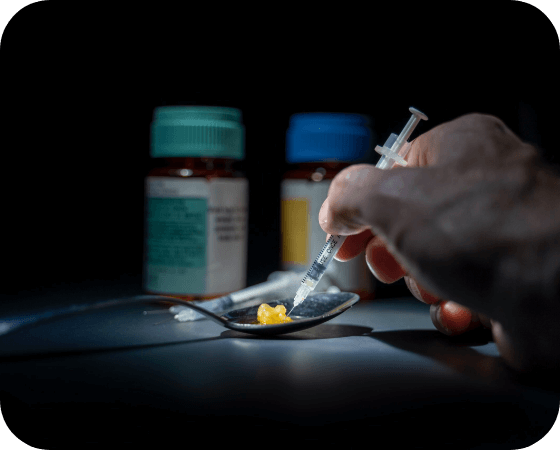
One harm reduction policy the administration has specifically endorsed is a needle exchange program that involves giving sterile syringes to people who inject drugs.  While the administration believes this strategy will help reduce transmission of infectious diseases associated with illegal drug use, some lawmakers and law enforcement officials are expected to oppose the new policy.

Higher Prison Sentences for Fentanyl?

Many opioids sold on the street are laced with fentanyl, contributing to the rise in overdose deaths.  To combat the growing prevalence of fentanyl, the Biden administration recently recommended that all fentanyl related substances be permanently placed into Schedule I of the Controlled Substances Act as currently fentanyl is a Schedule II drug.  According to the administration, this will provide law enforcement with the tools they need to respond to the trafficking and manufacture of fentanyl in an effort to reduce the overall supply of fentanyl.

However, criminal justice and civil rights advocates say the move would lead to harsher prison sentences, and in return, exacerbate racial disparities already prevalent in the criminal justice system.  Doing so, they argue, would make for a repeat of the nation’s experience with higher penalties for cocaine possession in the 1980s and 1990s, where criminal defendants had little recourse due to a lack of legal resources.

Other plans put forward by the Biden administration include:

  • Reducing stigma for people suffering from addiction.
  • Greater access to drug treatment.
  • A program to address racial and regional inequities in how people are treated for substance use disorder.

Will It Make a Difference?

Most of the administration’s proposals require congressional approval, and so far, a key proposal on harm reduction has gotten traction in Congress.  The Fiscal Year (FY) 2022 Labor-HHS-Education funding bill that was approved by the House in July 2021 removes a longstanding general provision that prohibits federal funds from being used to purchase syringes, thus clearing the way for needle exchange programs.  But as Congress grapples with high-priority items like the Build Back Better Act, FY 2022 spending, and the debt ceiling – all with aspirations to finish them by the end of the year – it remains to be seen how much Congress will do in the near-term to enable the administration to take new steps to reign in the opioid epidemic.  With perhaps a waning pandemic in 2022, lawmakers may be better positioned to work with the administration on addressing the opioid crisis in the second session of the 117th Congress.

michael-longmire-dLYk1p9YB0s-unsplash-scaled

Subscribe to Us Now!

Be a DC insider by getting our updates straight to your inbox