Check out our expert take on key activity shaping health care policy
Insights

Featured Blogs

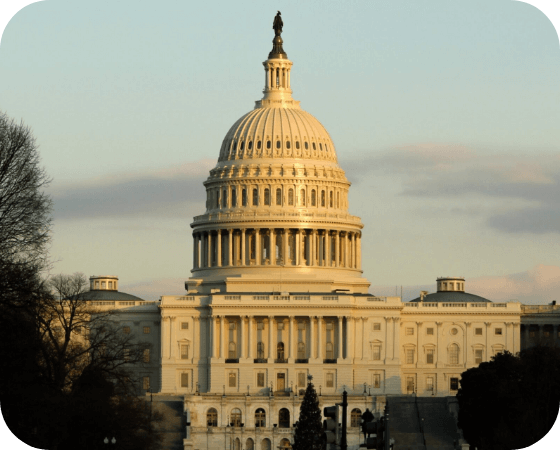
We all know this time of year is crazy with holiday parties, shopping for gifts, and getting ready to host or travel to see family or friends. It’s no exception in Washington, where lawmakers are racing to wrap up year-end business and prepare to transition to the new Congress and new administration. So, let’s get into it; welcome to the Week Ahead!
The Administration
Medicaid Waiver Race
The Department of Health and Human Services (HHS) is checking its list and checking it twice to find out which states will get new or amendments to existing Medicaid waivers approved before the new administration comes to town. We expect HHS to get through as many of the 37 requests from 34 states as possible, especially those the incoming Trump administration might deny. For example, both California and Washington waivers are trying to protect reproductive health and family planning services (see more at KFF).
Trump Picks Anti-Trust Chief
President-elect Trump has chosen Gail Slater, an aide to Vice President-elect Vance, to serve as the head of the Antitrust Division at the Department of Justice (DOJ). Ms. Slater’s pick is equivalent to a lump of coal for big tech as she is known to be a foe of that sector. This division also oversees mergers and acquisitions within the health care space. Her pick indicates that the DOJ, under a second Trump administration, may crack down on big health mergers. We are still waiting for Trump’s nominee to head up the Federal Trade Commission, which will provide another clue on how his administration might handle issues related to competition in health care.
The Senate
NDAA Likely on Deck
The Senate will likely begin considering the National Defense Authorization Act (NDAA) this week. With must-pass bills like the NDAA, there is always the potential for lawmakers to engage in a little gift exchange where lawmakers agree to something in the NDAA in exchange for passage of something else, like a yes vote on a government funding bill.
Mr. Musk Comes to Washington
Elon Musk visited with lawmakers at the Capitol on December 6 to discuss his plans for the newly minted Department of Government Efficiency (DOGE). Among others, he met with soon-to-be Senate Majority Leader John Thune (R-SD), the likely incoming Senate Appropriations Chair Susan Collins (R-ME), and Senate DOGE caucus leader Sen. Joni Ernst (R-IA). One interesting note is that Sen. Collins said she was “impressed with his energy and dedication.” That goes a long way since Sen. Collins, who is no stranger to opposing Republican administrations if she disagrees with them, will be someone DOGE will want to keep on their good side if they want her support for cutting government spending.
Senate Organizational Update
As the new Congress fast approaches, we are carefully watching for updates about the Senate’s organization in 2025. We are currently looking at a two-seat majority for most of the top committees. Additionally, the Senate plans to be in session on Fridays in the 119th Congress. That is a sign that Sen. Thune and the Republican caucus have ambitious plans for their new majority.
The House
C.R. Coming Together
Nothing brings Congress together like a government funding deadline right before the holidays. We expect the 118th Congress will follow the traditions of years past by passing a short-term Continuing Resolution (C.R.) to keep the lights on for the next 3 months. Expect a vote the week of December 16, giving the Senate and President Biden enough time to prevent a blue Christmas. We will also be looking for an extension of the Farm Bill, with a one-year extension looking the most likely. Fun fact: Congress last wrote a Farm Bill in 2018 (!) and has only been able to agree on extensions of that since.
Committee News
Both Republicans and Democrats are looking to get their committee leadership and rosters set for the 119th Congress, and the respective steering committees will soon decide the chairs and ranking members that will lead the committees in the new Congress. We are looking at new leadership at the House Energy and Commerce Committee. The race for chair is between Rep. Brett Guthrie (R-KY) and Rep. Bob Latta (R-OH), while Rep. Diane DeGette (D-CO) looks to have the Health Subcommittee ranking member position in the bag. There are also many openings on the Energy and Commerce and Ways and Means Health Subcommittees. Assuming the overall ratios for the subcommittees remain the same; we expect 3 openings for the GOP and 4 for the Democratic party on the Energy and Commerce Health Subcommittee and 2 openings for the GOP and 1 for the Democratic party on the Ways and Means Health Subcommittee.
There You Have It
Although things are busy at this time of year, there are many opportunities to fill your calendar with holiday cheer. Check out some of these events in the D.C. area or look into what’s happening in your community. Make it a great week!

Dr. Marty Makary, a surgeon, health care policy expert, and author, has been nominated for the role of FDA Commissioner in President-elect Trump’s second administration. The appointment is expected to impact drug regulation, health policy, and FDA transparency initiatives if confirmed.
Background and Qualifications
With a medical degree from Thomas Jefferson University and a residency completed at Georgetown University Hospital, Makary currently serves as a surgery and public health professor at Johns Hopkins University. His work focuses on medical ethics and health care reform. As a specialist in gastrointestinal surgery, he emphasizes laparoscopic and minimally invasive techniques, prioritizing safety and reducing medical errors in hospital care.
In addition to his clinical contributions, Makary is a public health advocate and a regular contributor to major media outlets. His commentary often highlights health care transparency, medical errors, and health equity issues. A New York Times bestselling author, his books, The Price We Pay and Blind Spots, examine systemic flaws in the U.S. health care system and suggest reforms.
Policy Positions and Priorities
His policy positions emphasize transparency, affordability, and innovation. Key priorities include enhancing access to health care information, reducing costs, and addressing medical errors. He supports COVID-19 vaccination for high-risk groups while advocating for clear communication about benefits and risks, particularly for younger individuals. He also supports recognizing natural immunity in vaccination policies.
Another critical focus is transparency in the health care system. Makary has called for greater public access to information about hospital performance, costs, and quality of care, as well as increased transparency in clinical trials, drug pricing, and the drug approval process.
His agenda includes significant efforts to reduce health care costs. He has criticized profit-driven practices and proposed reforms to lower spending and expand affordable care. Initiatives include promoting generic drugs to enhance market competition and opposing pay-for-delay agreements that delay affordable medications.
Concerns about regulatory delays at the FDA have led Makary to advocate for streamlining drug approvals while maintaining rigorous safety standards. His focus includes addressing chronic diseases, rare cancers, and emerging pandemics. Strengthening oversight of clinical trials and implementing robust safety protocols for approved drugs are key components of his patient safety initiatives.
Leadership at the FDA: Opportunities and Challenges
If confirmed, his leadership at the FDA could bring a balance between facilitating access to innovative treatments and ensuring safety standards. Challenges may include managing public scrutiny over accelerated drug approvals and navigating resistance from the pharmaceutical industry to proposed reforms. Maintaining public trust will be critical to success, with transparency playing a central role.
In broader health care reform, there may be opportunities for collaboration with figures such as Robert F. Kennedy Jr., despite differing views on vaccine policy. Shared priorities, such as improving transparency in the pharmaceutical industry or strengthening public health systems, could provide common ground.
Conclusion
The nomination of Dr. Makary as FDA Commissioner introduces the potential for significant changes in the agency’s role in public health. If he is confirmed, his ability to address key challenges, implement reforms, and build public trust will determine the impact of his leadership.

We know many readers may still be working through Thanksgiving leftovers, but this week, Congress is serving up nothing but lame duck. However, this meal could turn into a food fight real fast, with Congress running out of time to make decisions about government funding, the Farm Bill, and the National Defense Authorization Act. So, let’s get into it. Welcome to the Week Ahead!
The Administration
The Biden administration proposed its Contract Year 2026 Medicare Advantage and Part D rule on November 26. This rule is one of the last major ways the Biden administration can leave its mark on the MA and Part D programs, and they didn’t hold back. The rule proposes allowing Part D plans to cover anti-obesity medications in cases where the beneficiary does not have another health condition beyond obesity or being overweight. Under the new proposal, plans would be able to cover these drugs for beneficiaries who are obese but not those who are overweight. Additionally, Medicaid plans would be prohibited from excluding anti-obesity drugs if used to treat obesity. The rule also includes proposals to strengthen prior authorization and utilization management guardrails under the MA program. The rule, if finalized, would also codify previously issued guidance about implementing the provision of the Inflation Reduction Act that will allow Part D beneficiaries to spread out their out-of-pocket costs monthly instead of paying all at once.
But here is the kicker: it will be up to the Trump administration to finalize the rule, so what can we expect from the incoming administration on this proposed rule? Well, we know that President-Elect Trump’s nominees to head Health and Human Services (RFK Jr) and the Centers for Medicare and Medicaid Services Administration (Dr. Oz) don’t see eye to eye on anti-obesity medication.
RFK Jr. has criticized these drugs, but Dr. Oz has expressed support for them. We also know Dr. Oz has been a strong supporter of MA, so if he is confirmed, MA plans may have a more friendly voice within the administration.
As far as how the Trump administration will handle the implementation of the IRA, it’s about as clear as Thanksgiving gravy! Congressional Republicans have criticized the Medicare price negotiations as price controls. However, President-Elect Trump did pursue several proposals to reduce drug prices. Combine that with the unconventional pick of Dr. Oz to run CMS, and you’ve got a recipe for a potential surprise.
The Senate
The Senate Democratic Caucus will hold its leadership elections for the 119th Congress on December 3. The most hotly contested race will be between Senator Amy Klobuchar (D-MN) and Senator Corey Booker (D-NJ) to take over leadership of the Democratic Policy and Communications Committee from retiring Senator Debbie Stabenow (D-MI).
In addition to the Senate Democratic leadership races, we will be watching for any news related to the makeup of key health care committees in the Senate, including the Senate Finance Committee, which has jurisdiction over Medicare and Medicaid.
Due to retirements and the results of the 2024 elections, 5 Democratic senators currently serving on the Senate Finance Committee will not be returning for the 119th Congress. Even though the Senate Democratic Conference will have fewer seats on that committee, there will still be a need to fill some of these vacancies. Senator Bernie Sanders (I-VT) made news on November 22 by announcing his desire to serve on the Senate Finance Committee, which would be in addition to his service as the ranking member of the Senate Committee on Health, Education, Labor, and Pensions (HELP) in the next Congress.
Other Democratic senators who have reportedly expressed interest in joining Senate Finance include Sens. Tina Smith (D-MN), Raphael Warnock (D-GA), and Corey Booker (D-NJ).
We predict the GOP will gain 2-3 seats on the Senate Finance Committee due to the revised committee ratios. No Republicans currently serving on the Senate Finance Committee are retiring or lost reelection.
We will also be watching to see if congressional appropriators will respond to the letter from Senator Ted Budd (R-NC) and other senators from states impacted by recent hurricanes, requesting approval of the Biden administration’s request for supplemental funding request for disaster relief.
Additionally, the Senate HELP Committee is holding a hearing on December 5 about what the Food and Drug Administration is doing to regulate the food and beverage industry in light of the diabetes and obesity epidemics in America.
The House
Since the House of Representatives is the starting point for appropriations bills, let’s check in on where things stand on that front. From what we are hearing, it sounds like the House will be teeing up a short-term (3-4 month) continuing resolution – delaying any funding decisions for FY 2025 until the new Congressional session.
We also expect this bill will not include anything related to health care beyond the health care extenders. Based on analysis from recent Congressional Budget Office scores, we estimate extending these health care policies for a few months will cost $2-3 billion. Only acting on health care extenders is bad news for advocacy groups, which have been urging Congress to include other policy changes in any year-end legislation. Physician groups have been hoping that Congress might address concerns about how doctors’ pay under Medicare is calculated, but that seems unlikely to happen.
Additionally, the House Oversight and Accountability Select Subcommittee on the Coronavirus Pandemic will be holding a markup of their final report on December 4.
There You Have It
We recently posted about unique Thanksgiving food on LinkedIn. We’d love to hear if any of these (or any others) made it on your table this year. Make it a great week!