Insights^

Find our analysis on legislation, regulations, MedPAC meetings, and more. 

What Happened, What You Missed: February 14-18

Administration Working on New Masking Guidelines

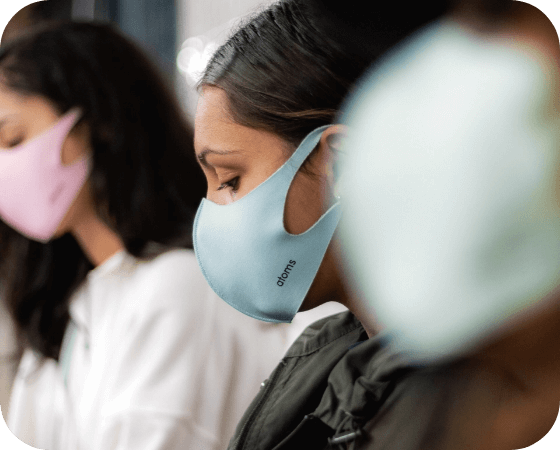
On Wednesday, White House Coronavirus Response Coordinator Jeff Zients told reporters that the administration is working with public health experts and business leaders to updates its pandemic guidance. The guidance will focus on hospitalizations rather than case numbers as metrics for determining when Americans should wear masks indoors.  The announcement comes as many blue states and cities have announced plans to roll back indoor mask requirements without input from the federal government.  In recent weeks, both case numbers and hospitalizations have declined across the nation.  Reports suggest new mask guidance from the Center for Disease Control and Prevention (CDC) could come as early as next week.

Senate Narrowly Confirms Robert Califf to Lead FDA

On Tuesday, the Senate voted 50-46 to confirm Robert Califf as the new Food and Drug Administration (FDA) Commissioner, clearing the way for the FDA to have a permanent leader in over a year.  The narrow vote comes after senators from both parties raised concerns about Califf’s handling of the opioid epidemic when he led the FDA from 2016 to 2017 as well as his ties to the pharmaceutical industry.  Califf will replace Janet Woodcock, who has served as the FDA’s temporary chief since January 2021 and will remain at FDA as principal deputy commissioner. It is not clear when Califf will officially begin his new role.

Senate Approves Bill to Fund Government through March 11

The Senate voted 65-27 to approve a continuing resolution (CR) on Thursday night to move the government funding deadline to March 11, giving lawmakers three more weeks to hammer out an agreement on a Fiscal Year (FY) 2022 appropriations omnibus.  Earlier in the week, the status of the three-week CR was in doubt after several GOP senators called for votes on controversial amendments to be added to the CR.  Some of the amendments, which only required a simple majority vote, would have prevented the Biden administration from enforcing vaccine mandates and make it harder to raise the debt ceiling.  Any changes to the CR would have forced the measure to go back to the House, which is in the middle of a two-week recess and where Democrats are unlikely to support a bill with any controversial amendments attached.  However, with several Republican senators absent from Washington to attend a security conference in Munich, the amendments failed to garner a majority vote.  President Biden is expected to sign the CR in law later today.

FTC Rejects Probe into Pharmacy Benefit Managers

On Thursday, the Federal Trade Commission (FTC) voted 2-2 to defeat a proposed investigation into whether pharmacy benefit managers (PBMs) are violating federal anti-competitive regulations.  Three PBMs currently control 80% of the market, and pharmacists and patient advocates have voiced concern for years that PBMs engage in anticompetitive practices that lead to higher drug prices and disadvantage independent or specialty pharmacies.  While the two commissioners who voted against the probe say they aren’t opposed to looking into the role of PBMs, they ultimately voted against the proposed investigation because it wasn’t comprehensive enough and they weren’t provided with sufficient notice of the vote.

ICYMI: The Obamas’ Portraits Go On Tour

In May 2021, the National Portrait Gallery’s portraits of former President Barack Obama and former First Lady Michelle Obama embarked on a five-city tour that includes an audio-visual element, educational workshops, presentations, and an illustrated book. The portraits were initially supposed to return to Washington this summer, but the Smithsonian has since announced new stops in San Francisco and Boston that will keep the portraits away from Washington until the fall.  Anyone who wants to see the portraits now can view them at Atlanta’s High Art Museum until March 20.

jacek-poblocki-QiO3dBQuPtg-unsplash-scaled

Could Manchin and Sinema Get Primaried for 2024?

Sens. Joe Manchin (D-WV) and Kyrsten Sinema (D-AZ) have torpedoed key Democratic proposals like voting right reform and the Build Back Better Act, which has sparked some lawmakers like Sen. Bernie Sanders (I-VT) to say that he would support primary challengers against both of his Democratic colleagues.  In theory, this would give Democrats an opportunity to replace both Manchin and Sinema with Senators who are more supportive of the party’s legislative agenda.  But what is the likelihood of a Democratic challenger replacing either of them in the Senate?

Joe Manchin

As much as he remains a thorn in the side of many congressional Democrats, Joe Manchin is probably the only Democrat capable of winning a statewide seat in the Mountain State.  That’s because the state leans heavily Republican – in the 2020 presidential election, Donald Trump won West Virginia with nearly 69% of the vote, the second-highest percentage carried by either presidential candidate that year (Wyoming was first, with Trump carrying nearly 70% of the vote).

Additionally, all winners of statewide races in West Virginia, who are currently holding elected office, are Republicans.  This includes Manchin’s colleague in the Senate, Shelley Moore Capito (R-WV), and all five directly elected executive branch officials in West Virginia’s state government including Republican Gov. Jim Justice.

Even if a Democratic candidate were to successfully defeat Manchin in the 2024 primary, they would almost certainly lose the general election.  In 2018, Manchin defeated his Republican opponent by a margin of only 3%, and it’s highly unlikely a Democrat even one iota further to the left would have fared any better.

It is also worth noting Joe Manchin is quite popular among West Virginia voters.  A recent poll by the American First Policy Institute showed 59% percent of voters approve of Manchin – nearly double of President Joe Biden’s approval rating of 30% in the state.  Manchin is also very familiar to West Virginia voters, having severed six years as governor before being elected to the Senate in 2010.  Even though West Virginia isn’t friendly territory for Democrats, Manchin has proven time and time again he’s the only Democrat capable of winning the state.

Kyrsten Sinema

The senior Arizona senator isn’t as immune to a primary challenger, however.  Arizona is a purple state that has been gradually trending blue.  President Joe Biden won the state in the 2020 general election by a razor-thin 0.4% margin, while then-Democratic candidate Mark Kelly defeated Sen. Martha McSally (R-AZ) by a margin of 2.4%.  In theory, this would give a Democratic senator candidate who’s slightly to the left of Sinema – and more supportive of the party’s legislative agenda – at least a somewhat viable shot at winning a statewide race.

Like Manchin, Sinema is up for reelection in 2024, and while no Democrats have officially announced plans to primary Sinema, Rep. Ruben Gallego (D-AZ) has publicly expressed interest.  The Phoenix-area congressman has been openly critical of Sinema before, and in January 2022, he met with some of Sinema’s donors in New York City.

More so, Sinema’s popularity has been dropping among Democratic voters in Arizona.  Sinema started 2021 with a 60% approval rating among Arizona Democrats, but since she voiced her opposition to the Build Back Better Act tax provisions and filibuster changes necessary to bring about voting rights reform, her approval rating among the state’s Democrats has dropped to just under 10% in January 2022.  With low approval ratings, a potential formidable challenger, and a state electorate leaning ever so slightly blue, Sinema could face some serious headaches if she seeks an additional Senate term two years from now.

However, a lot can change between now and 2024.  If the Democrats lose their majority in the Senate in the 2022 midterm elections, Manchin and Sinema’s hold on the party’s agenda won’t be quite as noticeable.  Additionally, priorities can change quickly, and Democrats may not be as occupied with sweeping legislative proposals over the next two years.  But at least in the case of Sinema, opportunities for potential primary challenges remain ripe.

katie-moum-o0kbc907i20-unsplash-1920x1280

How to Rock the Virtual Advocacy Meeting in 2022

Two years into the pandemic, and advocates are still primarily connecting with lawmakers in Washington over a telephone line or computer screen.  However, much has been learned over the past two years, and there are plenty of best practices that you can use to make sure your next virtual meeting with a member of Congress is knocked out of the park.

Embrace Videoconferencing

In the pandemic’s first year, conference calls seemed to be the modus operandi for advocates connecting with members of Congress and their staff.  Over the course of 2021, advocates and congressional offices alike increasingly warmed up to the idea of using videoconferencing platforms for meetings – with Zoom being an overwhelming favorite.  Here are some tips and tricks for using Zoom to your advantage.

  • For multiple meetings at the same time, use multiple accounts.  The basic Zoom plan that’s free-of-charge only allows you to schedule one meeting at the same time.  However, scheduling more than one meeting for the same time slot is easy – just use a verified email account to create a new Zoom account. This will allow advocates to run a new meeting that will run concurrent with what’s already on the calendar.  When setting up more than one meeting at the same time, it’s essential to keep in mind two things:  make sure the waiting room is NOT selected, and select the option to allow participants to join at any time.  These two steps will allow participants to meet without the host, which is the person who holds the Zoom account.
  • Do not schedule meetings with the same Zoom account-back-to-back.  If the ability to allow participants to join early anytime is selected, a participant could join a meeting early only to find that they are inadvertently part of a meeting that’s still running.  Ensuring at least a 30-minute window between meetings on the same Zoom account will prevent any accidental overlap on meeting attendees.
  • Double-check your links.  Scheduling multiple meetings can be tedious, so make sure all the Zoom links you created are for the intended meeting participates.  This will help avoid cases of participants entering the wrong meeting or starting the meeting at the incorrect time.

Make Calendar Invitations Your One-Stop-Shop

When your meeting is scheduled, send an invitation via Outlook or another email service to all meeting participants.  This way, both the advocates and congressional offices know who’s attending, which 1) gives the advocates an opportunity to coordinate beforehand and 2) provides a way for advocates and congressional staff to follow-up after the meeting.

Additionally, be sure to include other information that’s necessary to all participants to have a successful meeting:  This could include:

  • Links to Zoom, WebEx, or other videoconferencing platform.
  • Meeting materials like PowerPoint slides, one-pagers, leave-behinds, and links to relevant external sources.
  • Information about the legislator (connection to organization, past support of the advocacy issue, membership on relevant committee, etc.).

Recruit New Advocates

When setting up virtual meetings, don’t just rely on your normal “crew” that you could count on to meet legislators in-person.  Instead, look for people that may not be able to make travel arrangements to Washington but have plenty to add to the conversation.   With virtual meetings, geography and distance doesn’t pose any limitations, and advocates from anywhere can join your meeting to share a story with a congressional office.

christina-wocintechchat-com-UTw3j_aoIKM-unsplash-scaled

What Happened, What You Missed: February 7-11

CDC Stands By Indoor Masking Guidelines…for Now

As blue states announce plans to roll back requirements on indoor masking, Centers for Disease Control and Prevention (CDC) Director Rochelle Walensky said it’s still too soon to change the federal government’s current guidelines on masks due to high hospitalizations and deaths in some states.  However, Walensky did say her agency is currently working on new guidelines, which reports suggest could entail using data on hospitalization rates as a marker for public health interventions like masks instead of the currently used metric of daily case rates.  Over the past week, some Democratic governments and public health experts have been urging the administration to release new guidelines to help determine when it’s appropriate to lift mitigation measures and transition from a pandemic to an endemic phase.

Lawmakers Reach Tentative Budget Deal for FY 2022 Omnibus

After months of gridlock, congressional leaders reached an agreement on Wednesday on a framework for a Fiscal Year (FY) 2022 appropriations omnibus.  However, specific details of the agreement remain unknown to the public, including topline funding levels and whether earmarks will be included in the final spending bill.  Additionally, there is still a possibility that riders over controversial items like the Hyde Amendment could upend negotiations.  Until the FY 2022 appropriations omnibus can be finalized, Congress will need to advance a stopgap funding measure to ensure government funding continues beyond the current deadline of February 18.  Last week, the House approved a continuing resolution (CR) to fund the government through March 11, and the Senate is expected to vote on a CR next week.

Senate to Vote on Califf’s Confirmation Next Week

Senate Majority Leader Chuck Schumer (D-NY) filed a motion to limit debate yesterday on Robert Califf’s nomination to lead the Food and Drug Administration (FDA), which sets the stage for a confirmation vote next week that is all but certain to clear the Senate.  The motion comes after Califf’s nomination had been stalled for weeks due to concerns from Senators from both parties over Califf’s response to the opioid crisis when he served as FDA Commissioner in 2016-2017.  If confirmed, Califf would be the FDA’s first permanent commissioner in over a year.

SFC Outlines Next Steps on Bipartisan Mental Health Bill

Earlier this week, Senate Finance Committee Chairman Ron Wyden (D-OR) tapped subcommittee co-chairs with crafting bipartisan mental health legislation with hopes to introduce this summer.  Sens. Ben Cardin (D-MD) and John Thune (R-SD) will work together on a telehealth component, Sens. (Valium) Tom Carper (D-DE) and Bill Cassidy (R-LA) will focus on provisions related to youth behavioral health, Sens. Michael Bennet’s (D-CO) and Richard Burr’s (R-NC) will address parity between physical and behavioral health, and Sens. Catherine Cortez Masto (D-NV) and John Cornyn (R-TX) will work on integrated care.

ICYMI: Super Bowl to Feature Several Athletes from the DC Area

This Sunday’s big game will feature nearly a dozen athletes who are either from or have ties to the Washington, DC metropolitan area.  To name a few on the Cincinnati Bengals’ roster, linebacker Keandre Jones went to high school in Olney, Maryland and played football at the University of Maryland, while right tackle Isaiah Prince grew up in Greenbelt, Maryland.  On the Los Angeles Rams roster, running back Jack Funk is a Gaithersburg, Maryland native and played college ball at the University of Maryland, while Fairfax County Virginia’s Nick Scott, who plays defensive back, is the last National Football League player to ever intercept the recently retired Tom Brady.

brian-asare-z7lTC8cFKKs-unsplash-1920x3326

Why ARPA-H Needs to Be Independent from NIH to Be Successful

The nation needs more breakthrough medical treatments.  While the National Institutes of Health (NIH) is the government’s leading biomedical research agency, unfortunately, it takes a long time to turn NIH-supported research into cures.  To bridge this gap between research and innovation, Democrats are proposing an Advanced Research Projects Agency for Health (ARPA-H) with the hope that it will deliver breakthrough medical treatments quicker. 

For ARPA-H to be successful, its placement within the structure of the federal government may be key.  In a February 8 hearing by the Health Subcommittee of the House Energy and Commerce Committee, witnesses testified to make the case that for ARPA-H to be effective, it cannot be housed within the NIH – instead, ARPA-H must be an independent agency within outside the purview of the Department of Health and Human Services (HHS).

Democrats modeled ARPA-H after the Defense Advanced Research Projects Agency (DARPA), an independent research and development agency within the Department of Defense, that’s charged with the development of emergency technologies for use by the military.  According to former Assistant Secretary for Health Brett Giroir – a member of the witness panel and a former Director of Defense Science Office at DARPA – the independent status of DARPA was crucial in its ability to bring about innovations like cellular technology and the Global Positioning System (GPS).

During the hearing, members of the witness panel discussed several reasons why ARPA-H must be independent of NIH to be successful.

  • Culture.  Like DAPRA, ARPA-H would need to have a distinct culture, vision, and approach to problem solving to deliver breakthroughs.  This is only possible if ARPA-H is separate  from NIH – otherwise, the new agency will be unable to develop a culture distinct from NIH.
  • Operations. Unlike NIH researchers, project managers at ARPA-H would follow timelines with specific deliverables that witnesses at the hearing suggested being publicly posted.  DARPA follows a similar model
  • Interaction with private sector.  Project managers at ARPA-H would be required to engage with the private sector to ensure that there is no overlap between research being conducted within the new agency and drug developers.  Witnesses at the hearing additionally suggested that ARPA-H hold listening sessions and/or engage with specific communities to ensure health equity is a focus at the new agency.

What comes next? House and Senate appropriators proposed funding for ARPA-H in Fiscal Year (2022) appropriations.  However, the new agency’s future is increasingly in doubt as lawmakers move to pass another continuing resolution to keep the government funded at FY 2021 levels through March 11 – which mean no funding for new initiatives like ARPA-H.  And it’s not just appropriations – for ARPA-H to become a reality, Congress needs to approve authorizing legislation, and there’s currently no timetable for when either of the bills that authorize ARPA-H will move forward.

cdc-XLhDvfz0sUM-unsplash-1920x1280

Subscribe to Us Now!

Be a DC insider by getting our updates straight to your inbox